
prueba de disyuntores
As a premier Fabricante de equipos de pruebas eléctricas, Run Test designs and manufactures industrial-grade circuit breaker test equipment engineered for the most demanding power grid environments. Our comprehensive switchgear testing catalog delivers rugged field portability combined with laboratory-grade precision to maximize your substation maintenance efficiency.
Core Selling Points & Product Advantages:
-
All-in-One Mechanical & Timing Analysis: Our flagship analizador de disyuntores series captures opening/closing times, bounce, synchronization, stroke, and velocity curves in a single test cycle for SF6 and GIS switchgear.
-
High-Current Loop Resistance Evaluation: Our comprobador de resistencia de contacto series delivers steady, pure 100A/200A DC outputs to accurately measure main contact resistance with micro-ohm resolution, fully complying with IEC 62271-1.
-
Quantitative Vacuum Degree Leakage Auditing: Our advanced comprobador de interruptores en vacío utilizes non-destructive magnetron discharge technology to precisely measure the internal pressure of medium-voltage VCB bottles without dismantling.
-
Dual-Grounding (BSG) Field Protection: Built-in safety testing protocols allow engineers to safely calibrate circuit breakers with both sides grounded, eliminating dangerous induced voltage risks.
Contact Run Test Engineers Today for Factory-Direct Pricing & Detailed Technical Datasheets!
-
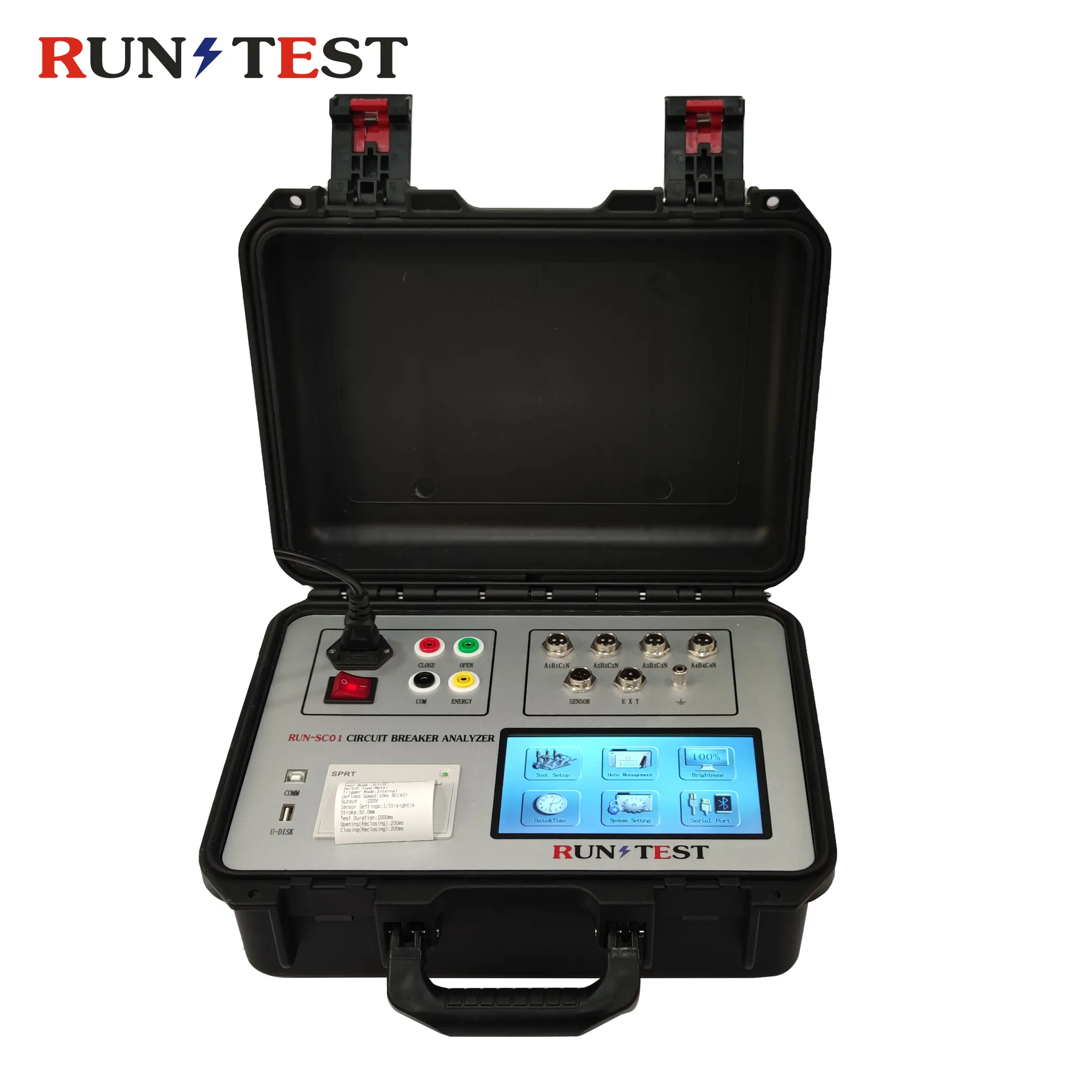
Analizador de interruptores automáticos Interruptor de prueba de temporización Instrumento de prueba de temporización
-
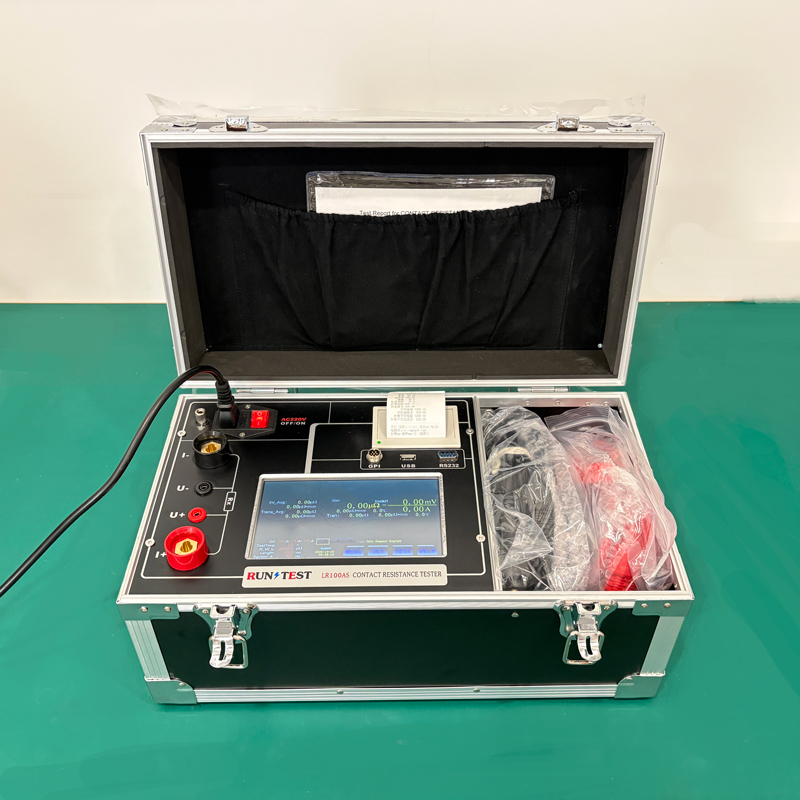
Medidor de Resistencia de Contacto 100A Comprobador de Resistencia de Bucle de Interruptor
-
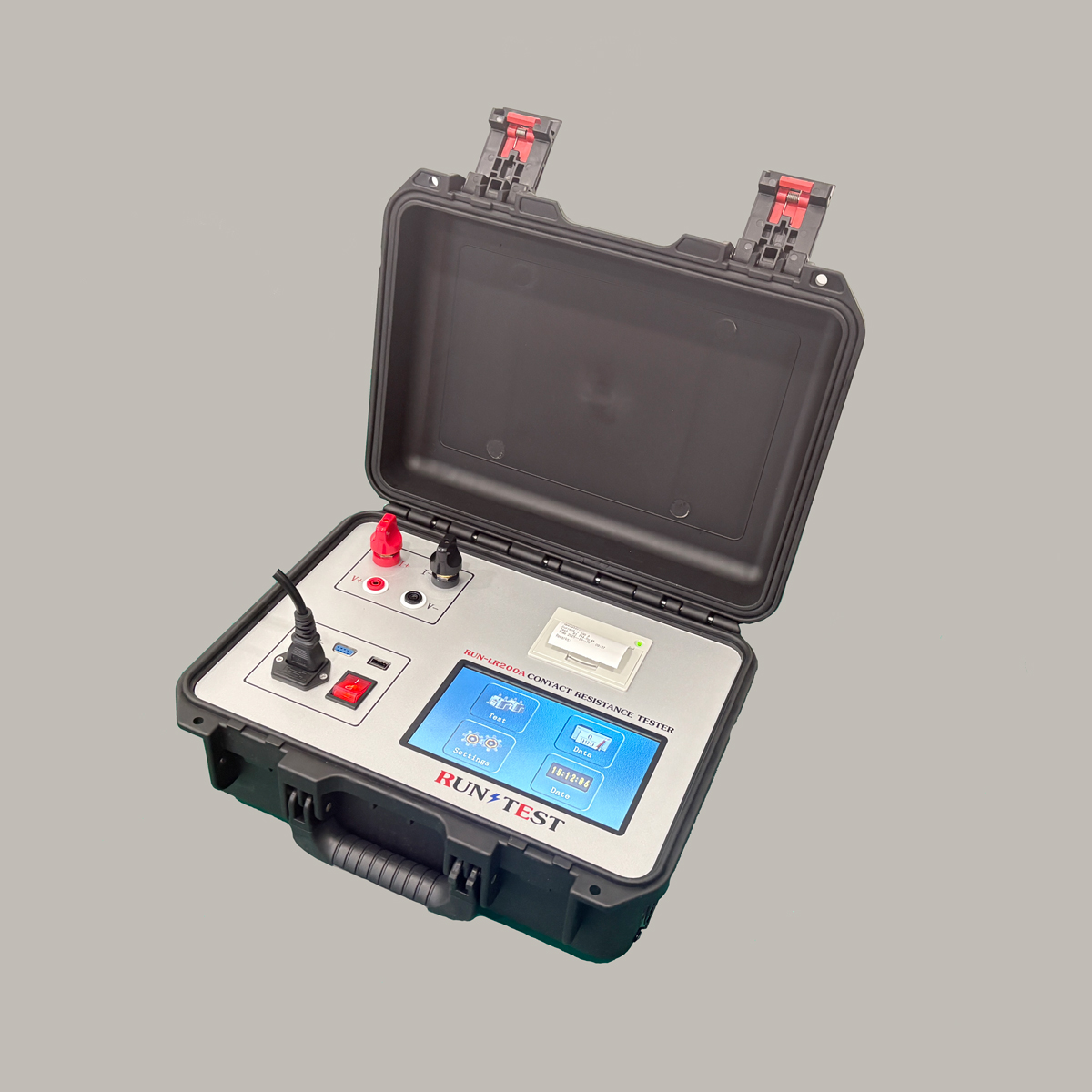
Comprobador de interruptores de alta tensión 200A Comprobador de resistencia de bucle
-
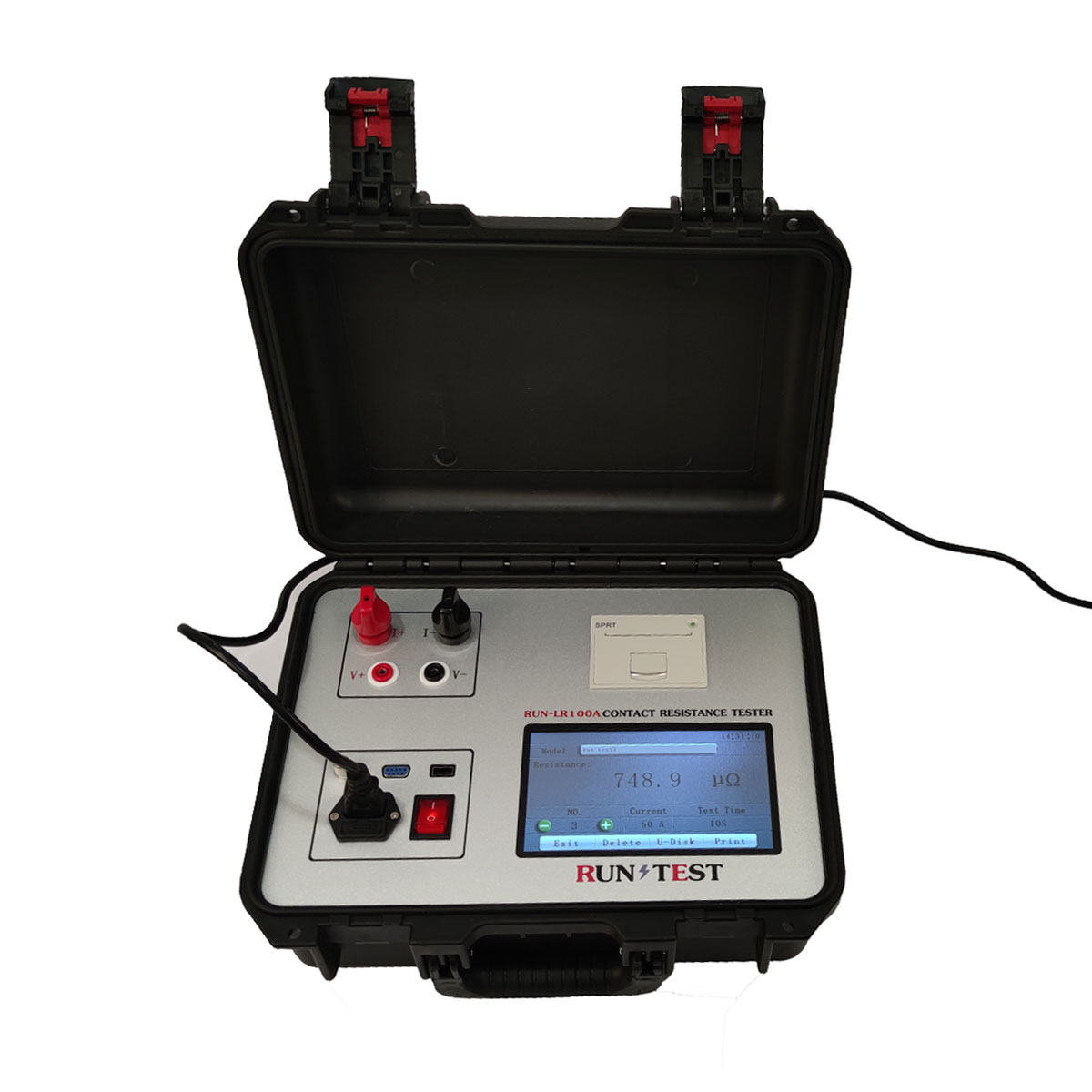
Interruptor automático Comprobador de resistencia de bucle de contacto 100A
-
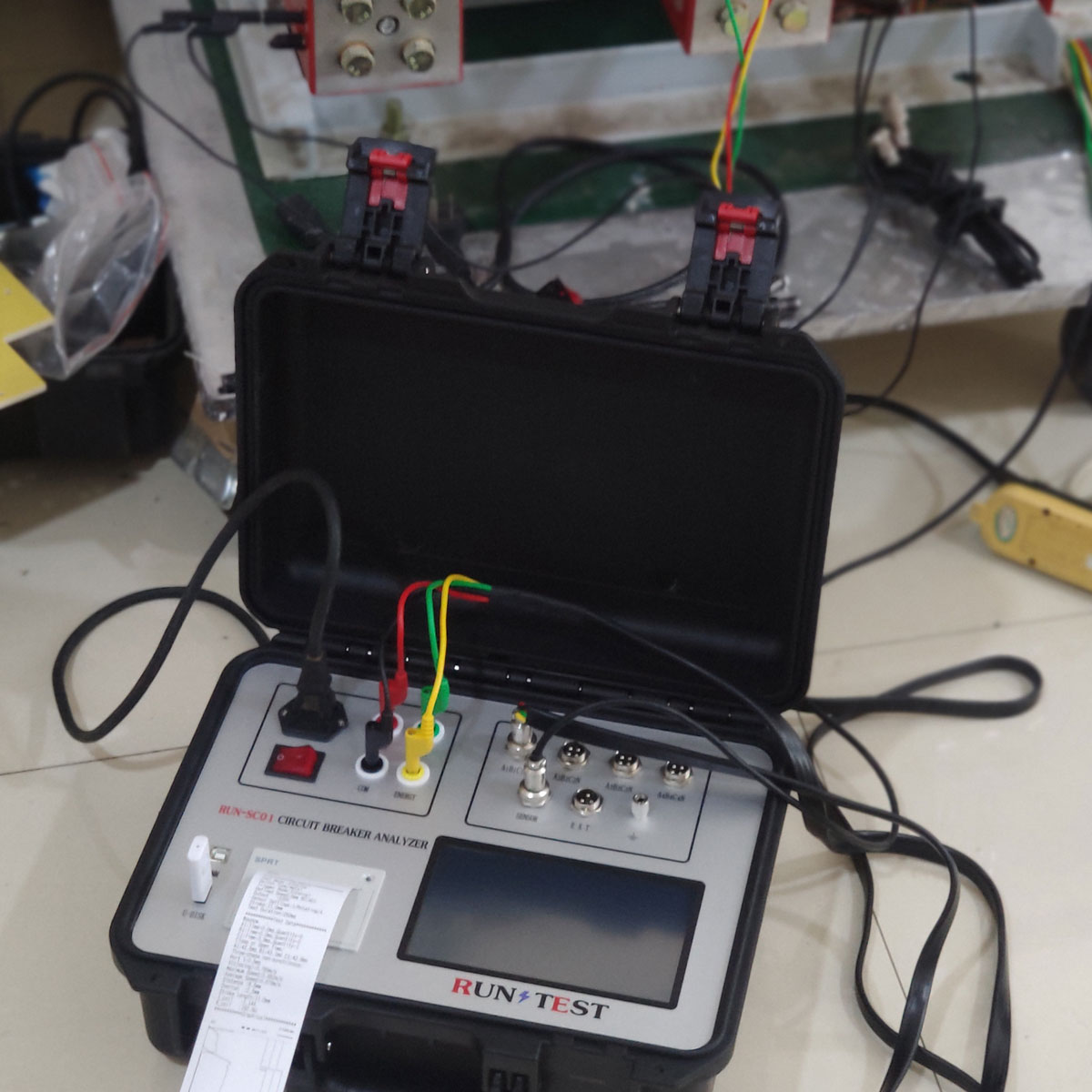
Característica dinámica Interruptor automático de alta tensión Analizador dinámico
-
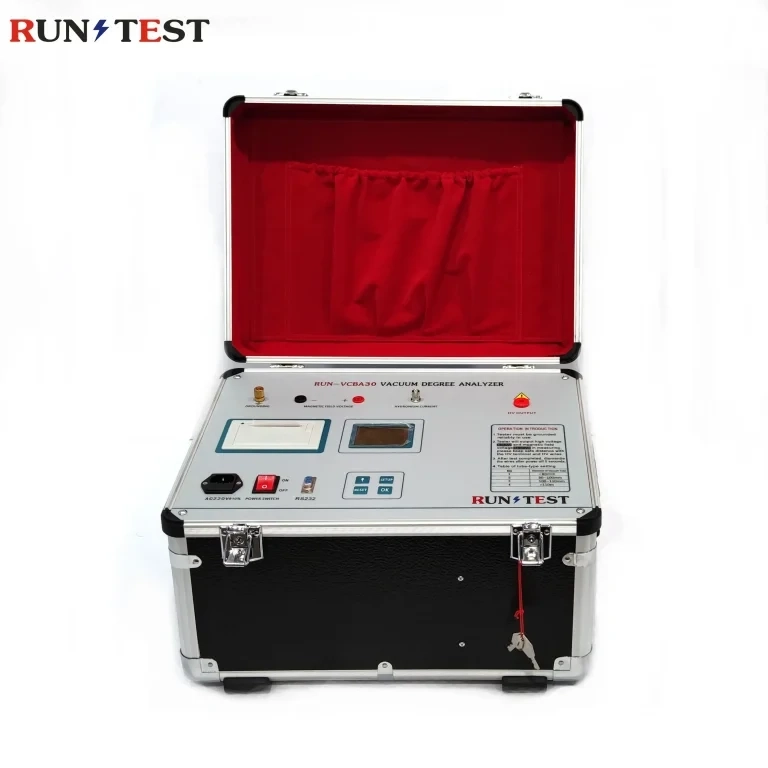
Interruptor Vacuity Test Kit Vacuum Interrupter Tester Vcb Vacuum Degree Test Equipment
-
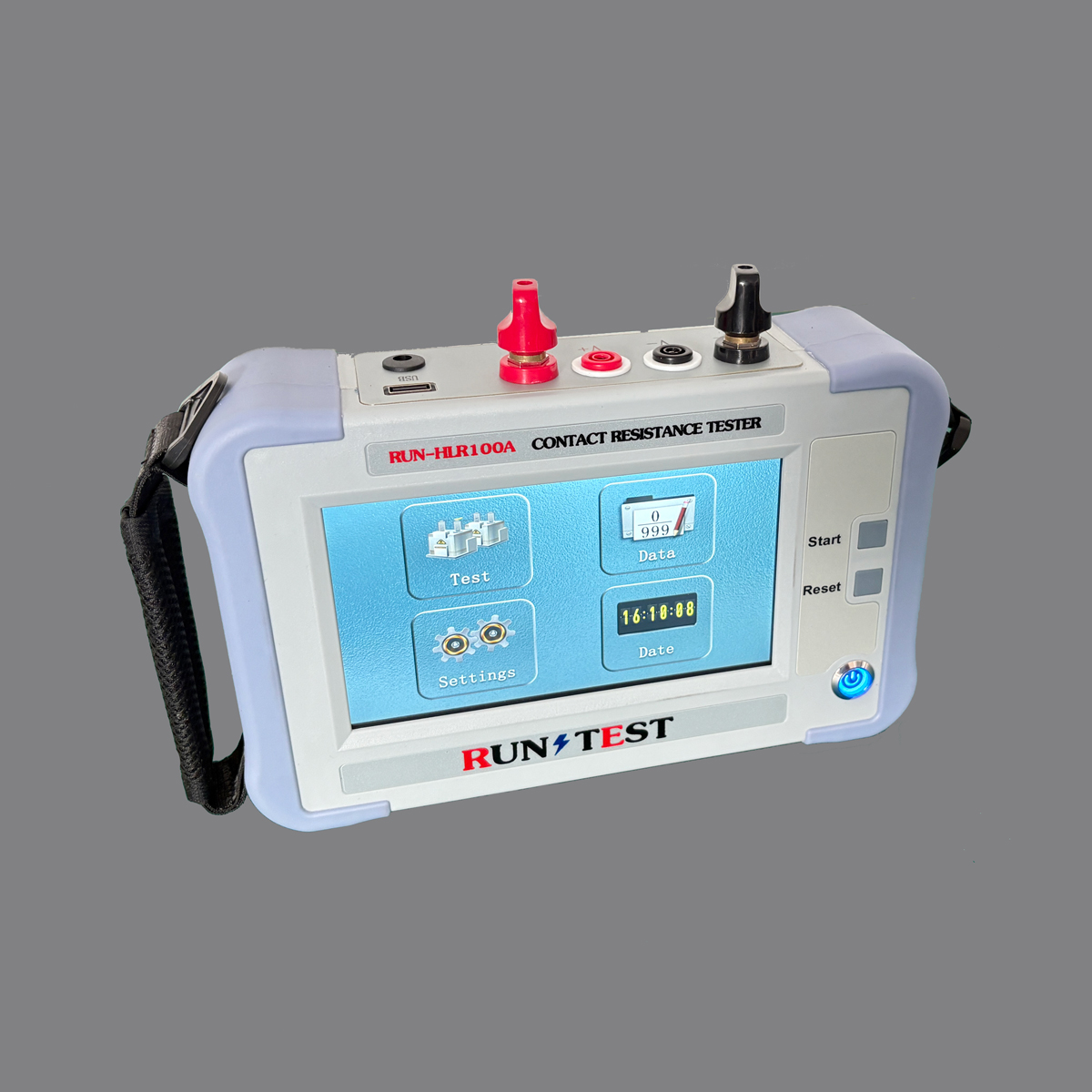
Comprobador de resistencia de contactos de 100 A de tipo manual
-
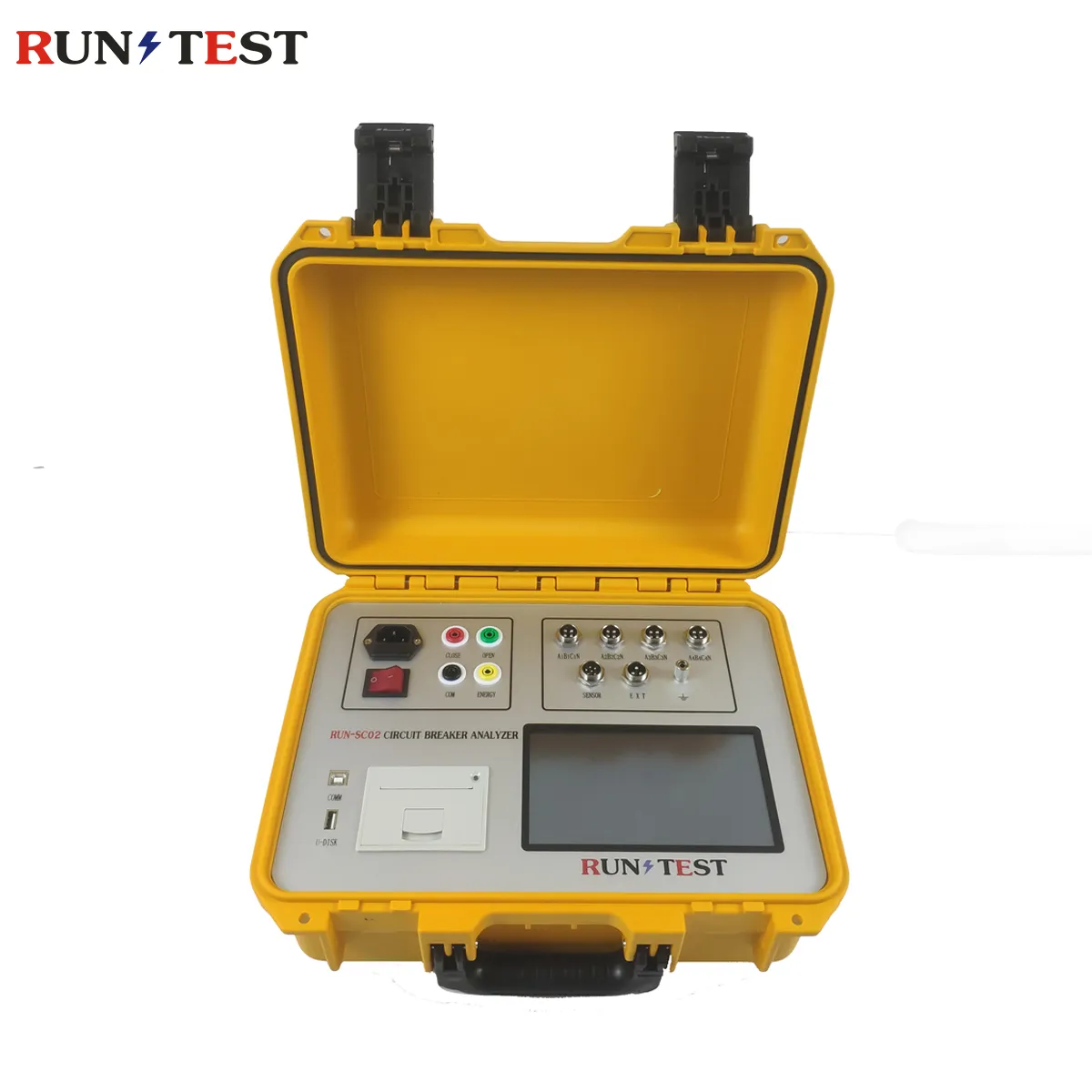
Comprobador de interruptores 20A Comprobador de temporización de interruptores
-
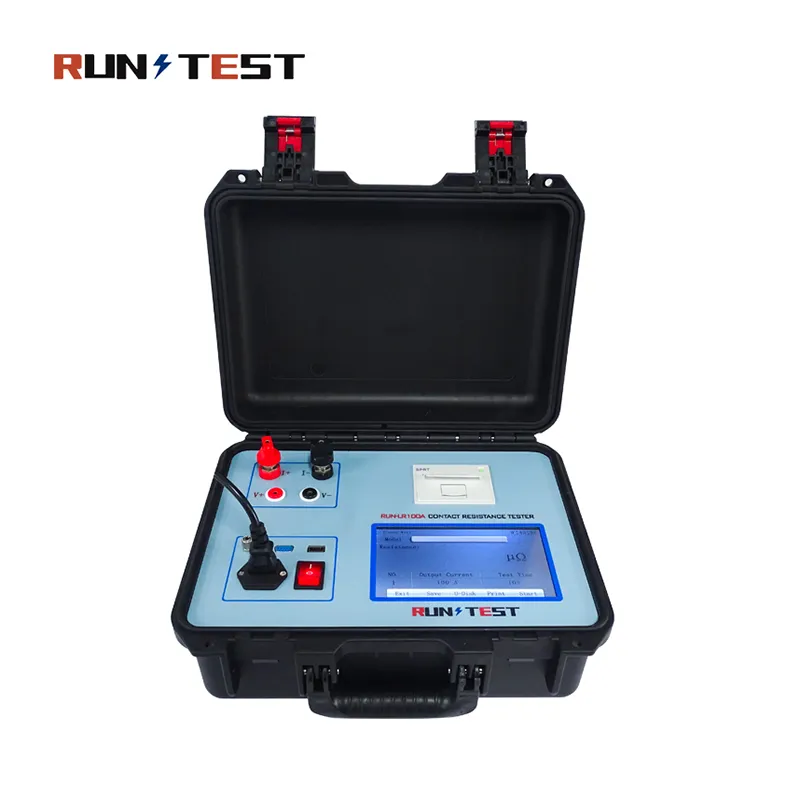
Micro-Ohmímetro Digital 100A Medidor de resistencia de bucle de contacto
What Is Circuit Breaker Testing Equipment?
Circuit breaker test equipment is engineered to verify the mechanical performance, timing accuracy, and electrical reliability of high-voltage circuit breakers used in power grids. Our professional product range includes high-voltage breaker analyzers, vacuum interrupter testers, and micro-ohmmeters designed for commissioning, routine maintenance, and troubleshooting in demanding electrical substation environments.
As a leading circuit breaker testing equipment manufacturer, Run Test provides instruments capable of accurately capturing contact closing/opening time, bounce duration, velocity, stroke, and contact resistance under real-world scenarios. This industrial-grade comprobador de disyuntores series ensures that critical switchgear operates exactly when needed to prevent catastrophic system failures.
Our testing systems are widely utilized by:
-
Power generation and grid utilities
-
High-voltage and extra-high-voltage (EHV) substations
-
Switchgear and GIS manufacturers
-
Industrial plants & heavy manufacturing facilities
-
Renewable energy (Wind & Solar) power plants
-
Electrical maintenance and testing laboratories
Whether you need a compact, portable circuit breaker tester for field services or an advanced, automated analyzer for complex GIS testing schemes, Run Test delivers reliable, microprocessor-based solutions for modern power system asset management.
Why Choose Run Test Circuit Breaker Testers?
As a premier Fabricante de equipos de pruebas eléctricas, Run Test designs and manufactures industrial-grade switchgear testing series engineered for the most demanding environments. Our equipment combines rugged field portability with laboratory-grade precision to deliver unmatched field testing efficiency.
Core Selling Points & Product Advantages:
-
All-in-One Mechanical & Electrical Analysis: Simultaneously measures opening/closing time, bounce, velocity, stroke, and dynamic contact resistance (DCRM) in a single test cycle.
-
High-Accuracy Contact Resistance Measurement: Built-in micro-ohmmeters deliver up to 100A/200A pure DC current output to measure main contact loop resistance with micro-ohm resolution.
-
Dual-Grounding Testing (BSG Support): Safely tests circuit breakers with both sides grounded, eliminating the risk of induced high voltage to protect field engineers and equipment.
-
Fully Automated Software Platform: Features an embedded large industrial screen or PC control interface, allowing for automatic graphical curve generation (time-travel curves) and one-click PDF test reports.
-
Industrial-Grade Hardware Reliability: Internal thermal management, robust over-current/over-voltage protections, and reinforced shock-absorption housing specialized for harsh substation environments.
Contact Our Engineers Today to Get Factory-Direct Pricing & Detailed Technical Datasheets!
Types of Circuit Breaker Testing Equipment We Offer
1. High-Voltage Circuit Breaker Analyzer (Our Flagship Mechanical & Timing Solution)
Our analizador de disyuntores series is the premier solution for comprehensive timing, speed, and mechanical characteristic testing of high-voltage switchgear. Designed for SF6, vacuum, and oil circuit breakers, it can simultaneously measure up to 12 metal contacts, auxiliary contacts, and resistor contacts in a single closing or opening operation.
-
Key Capabilities: Precisely captures opening/closing time, bounce duration, bounce frequency, phase synchronization, physical velocity, total stroke, and over-travel.
-
Core Advantages: Features an integrated large color LCD screen and a built-in adjustable DC operating power supply (24V - 250V), allowing engineers to perform tests without external DC sources. It supports dynamic contact resistance measurement (DCRM) to evaluate arc-contact wearing without dismantling.
-
Graphical Analysis: Automatically plots and displays real-time time-travel curves, velocity graphs, and coil current waveforms for instant on-site diagnostics.
2. Contact Resistance Tester / Digital Micro-Ohmmeter
En comprobador de resistencia de contacto series is engineered specifically to measure the loop resistance of circuit breaker main contacts, switchgear joints, busbar welds, and high-current cable splices. Utilizing advanced high-frequency switching power supply technology, it delivers a steady, pure DC current output to overcome galvanic skin effects.
-
Key Capabilities: Provides continuous and selectable high-current injection (including standard 100A and 200A DC outputs) to measure contact resistance with ultra-high accuracy and micro-ohm (μΩ) resolution.
-
Core Advantages: Designed to comply with international IEC 62271-1 testing standards. Features a compact, rugged housing with intelligent thermal overload protection, ensuring reliable performance during heavy-duty, repetitive testing in high-voltage substation switchyards.
-
Safety Integration: Fully compatible with Both Sides Grounded (BSG) testing systems to ensure absolute safety for field operators against induced voltages.
3. Vacuum Interrupter Tester
For medium-voltage vacuum circuit breakers (VCBs), our comprobador de interruptores en vacío provides advanced, non-destructive quantitative analysis of the internal vacuum level. Instead of traditional withstanding voltage tests that only give a pass/fail result, this instrument measures the exact vacuum pressure inside the vacuum bottle.
-
Key Capabilities: Utilizes the magnetron discharge method to measure vacuum levels ranging from 10-5 to 10-1 Pa without dismantling the circuit breaker from its operating mechanism.
-
Core Advantages: Features built-in calibration curves for dozens of international vacuum tube brands. It delivers highly accurate, repeatable results, enabling maintenance teams to predict the remaining service life of vacuum bottles and prevent catastrophic arc-extinguishing failures.
-
Field Portability: Lightweight and field-ready design, equipped with strong anti-interference shielding specialized for high-voltage substation environment noise.
High-Voltage Breaker Analyzer vs. Contact Resistance Tester vs. Vacuum Interrupter Tester Comparison Guide
Review our quick selection matrix below to find the exact circuit breaker testing kit tailored for your maintenance or commissioning tasks:
| Comparison Feature | High-Voltage Breaker Analyzer | Comprobador de resistencia de contacto | Comprobador de interruptores de vacío |
| Primary Test Parameters | Timing, velocity, stroke, bounce, synchronization, and coil current. | Main contact loop resistance, switchgear joint resistance. | Quantitative vacuum pressure, ionization current, and vacuum degree. |
| Output / Test Injection | DC 24V - 250V internal adjustable control power supply. | Pure DC 50A, 100A, or 200A stable constant current. | High-voltage magnetic control pulse output (Magnetron discharge method). |
| Core Target Application |
• Mechanical characteristic verification • Switchgear timing alignment • GIS and outdoor breaker commissioning |
• Contact degradation analysis • Substation joint inspection • Busbar connection testing |
• Vacuum level leakage detection • Vacuum bottle lifespan prediction • Medium-voltage VCB inspection |
| Graphical Curve Display | Sí. Displays time-travel, velocity, and coil current curves instantly. | No. Displays precise numerical micro-ohm ($\mu\Omega$) values. | No. Displays exact pressure values in Pascal (Pa) or Torr. |
| Normas aplicables | IEC 62271-100 mechanical characteristic requirements | IEC 62271-1 contact resistance testing mandates | JB/T 9741 quantitative vacuum degree measurement rules |
| Circuit Breaker Types Covered | Suitable for all types: SF6, Vacuum, Oil, and GIS switchgear. | Suitable for all high-current electrical contacts and breaker poles. | Specifically for Vacuum Circuit Breakers (VCBs) and vacuum bottles. |
| Best For | Substation commissioning teams, switchgear factories, and EHV maintenance departments. | Electrical contractors, industrial maintenance teams, and power utility repair crews. | Power distribution utilities, railway power sub-stations, and VCB maintenance labs. |
Circuit Breaker Testing: Industry Insights & Evaluation Key Points
Verifying that circuit breakers actuate precisely at pre-set fault current levels and operate reliably during severe grid disruptions is critical for safeguarding power assets. Periodic electrical and mechanical performance checks are mandatory during initial commissioning, routine preventive maintenance, and post-failure root-cause analyses.
1. Mechanical Operational & Timing Test
-
Primary Objective: To verify that the intricate mechanical operating mechanism and control systems of the circuit breaker are functioning flawlessly.
-
What We Evaluate: The exact opening and closing time velocities of the breaker poles; the structural status of critical driving components, including charging springs, trip/close coils, and auxiliary motors; phase synchronization to ensure all poles open and close simultaneously.
-
Methodology: The circuit breaker is actuated multiple times via manual controls or automated software signals to monitor its dynamic response. Advanced circuit breaker analyzers capture and plot time-travel curves to ensure total compliance with rated physical tolerances.
2. Trip Timing & Secondary Injection Test
-
Primary Objective: To guarantee that the trip unit commands the breaker to isolate faults within millisecond-level precision.
-
What We Evaluate: The precise tripping speed and protective delay times under simulated overcurrent, overloading, or short-circuit fault conditions.
-
Methodology: Technicians utilize precise simulation instruments to inject specified test currents into the trip circuitry. By accurately metering the lapse between fault initiation and the separation of main contacts, we ensure that the breaker clears accidents in time to protect upstream substation transformers.
3. Contact Resistance & Loop Evaluation
-
Primary Objective: To assess the degradation, wear, and health status of the breaker's internal main contacts.
-
What We Evaluate: The micro-ohm ($\mu\Omega$) electrical resistance across closed contacts. Elevated resistance values typically indicate contact erosion, surface oxidation, misalignment, or loose switchgear busbar connections.
-
Methodology: A stable, high-current DC output (typically 100A or 200A) is injected through the breaker loop using a specialized comprobador de resistencia de contacto. By measuring the micro-volt drop across the terminals, Ohm’s Law is applied to calculate the precise loop resistance, which typically should not exceed a few micro-ohms.
Why Professional Circuit Breaker Testing Is Essential
-
Uncompromised Substation Safety: Rigorous testing guarantees that high-voltage switchgear will successfully extinguish destructive arcs during short-circuits, preventing catastrophic fires and protecting field personnel.
-
Maximizing Power Grid Reliability: Regular, automated diagnostic checks detect sub-health symptoms before they escalate into terminal equipment failures, drastically reducing unscheduled grid downtime and blackouts.
-
Regulatory Compliance & Auditing: Periodic verification ensures full compliance with international safety regulations and asset management mandates, including IEC 62271-100 and IEEE standards, providing unmodifiable PDF test records for safety audits.
-
Predictive Lifecycle Maintenance: Early identification of contact wear, spring fatigue, or mechanical misalignment allows power utilities to transition from reactive troubleshooting to highly cost-effective, predictive lifecycle maintenance.
Field Applications of Circuit Breaker Test Equipment
Our industrial-grade switchgear testing series is critical across a multitude of field operations:
-
Substation Acceptance Testing: Validating that brand-new high-voltage circuit breakers and GIS installations comply with factory specifications prior to initial energization.
-
Routine Condition Monitoring: Periodic check-ups to identify slow operating mechanisms, contact wearing, or spring fatigue before they lead to a system trip failure.
-
Loop Resistance Verification: Conducting high-current micro-ohm testing on circuit breaker poles to ensure excessive resistance doesn't cause thermal runaway under normal load current.
-
Vacuum Integrity Audits: Checking medium-voltage vacuum bottles for microscopic gas leaks to prevent explosion risks during short-circuit arc extinguishing.
-
Post-Fault Overhaul Inspection: Re-testing mechanical timings after a severe grid fault clearing to ensure the breaker didn't sustain structural or dynamic damage.
Step-by-Step Operating Guide for Circuit Breaker Testers
(Note: Always apply proper grounding and follow high-voltage safety clearance regulations before testing.)
-
Step 1: Isolation and Main System Grounding: Safely isolate the target circuit breaker from the live high-voltage busbar. Open the isolating switches on both sides and connect the breaker housing securely to the substation ground grid.
-
Step 2: Signal and Control Wiring: Connect the fracture timing cables to the breaker's main contacts. Wire the close/open control output lines from the tester into the breaker's secondary control cabinet (trip/close coils) to allow the tester to command the breaker.
-
Step 3: Stroke Sensor Installation: For timing and speed analyzers, mount the high-precision linear or angular rotation travel sensor onto the breaker’s operating mechanism shaft to accurately capture physical movement.
-
Step 4: Test Profile Configuration: Power on the Comprobador de disyuntores. Select the appropriate test mode (e.g., Close, Open, Close-Open, or Resistance Test). Configure the internal DC control voltage and nominal travel range parameters.
-
Step 5: Test Execution and Data Export: Trigger the test sequence. The instrument will command the breaker to operate, instantly sample all physical/electrical parameters, and display data tables along with mechanical velocity curves. Review and export the automated, unmodifiable test report.
About Run Test – Your Trusted Electric Test Equipment Manufacturer
As a premier Fabricante de equipos de pruebas eléctricas, Run Test is dedicated to engineering high-precision power system testing solutions for the global electrical industry. With decades of manufacturing expertise, our state-of-the-art facility specializes in the R&D, production, and calibration of heavy-duty circuit breaker test equipment, secondary injection relay test kits, and transformer test sets.
Every circuit breaker testing equipment we manufacture undergoes rigorous factory calibration to meet strict international standards, including ISO 9001 and CE certifications. Our digital and microprocessor-based test sets are widely trusted by power utilities, high-voltage substations, and electrical engineering labs across more than 50 countries. We provide factory-direct pricing, continuous software updates, and reliable warranty services to power your grid testing projects.