
prueba del transformador
High-Voltage Transformer Diagnostic Systems & Test Equipment
Substation-Ready Electrical Test Sets for Power, Distribution, and Instrument Transformers
Fully Compliant with IEC 60076, IEEE C57, CIGRE Guidelines, and ANSI/NETA Acceptance Testing Standards.
Why Choose Run Test Electric?
As an established transformer test equipment manufacturer and global exporter, Run Test Electric delivers field-proven diagnostic solutions engineered for the most demanding high-voltage environments.
-
Factory Direct Supply: Direct-from-factory pricing with flexible OEM & ODM customization capabilities to match your specific fleet testing requirements.
-
Uncompromising Compliance: All diagnostic architectures are designed, manufactured, and calibrated in strict accordance with IEC and IEEE international engineering metrics.
-
Full Metrological Traceability: Every transformer tester meter undergoes rigorous quality control and includes a factory calibration report traceable to national reference standards.
-
Global Export Experience: Secure, IP65-rated heavy-duty rugged packaging with fast delivery and continuous technical support from veteran high-voltage engineers.
-
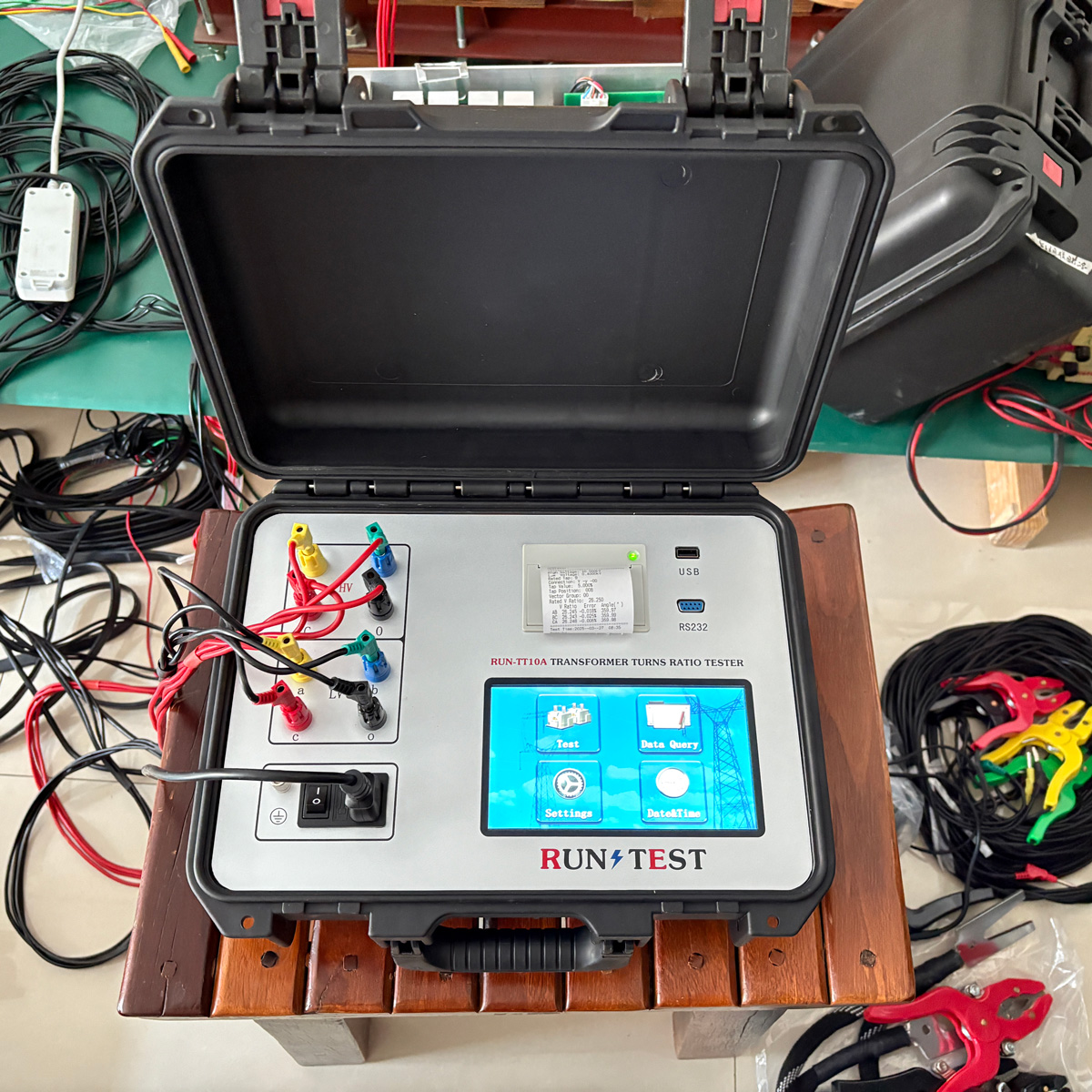
Comprobador de la relación de transformación de transformadores trifásicos
-
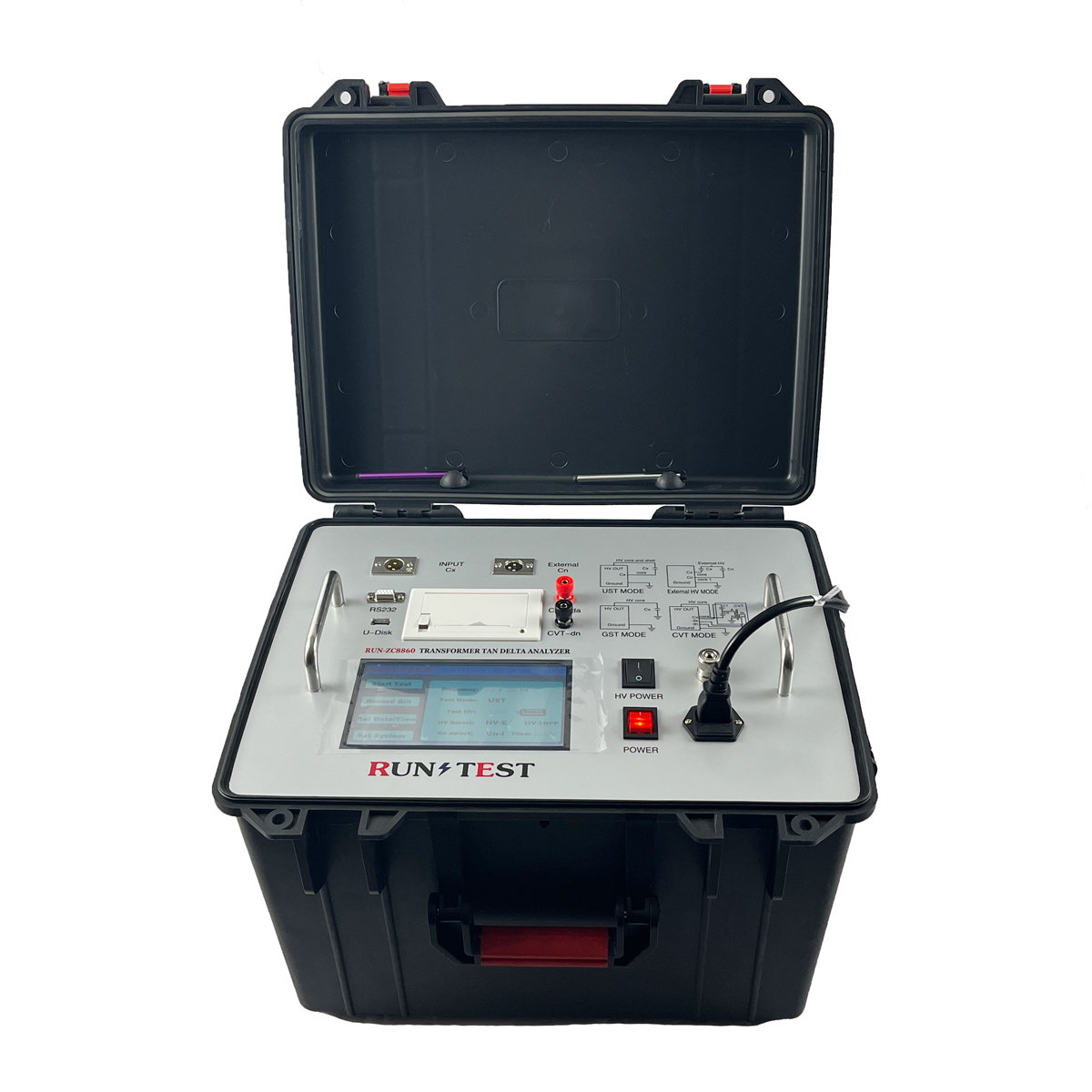
Comprobador de pérdidas dieléctricas de transformadores IPF Comprobador Tan Delta de transformadores
-
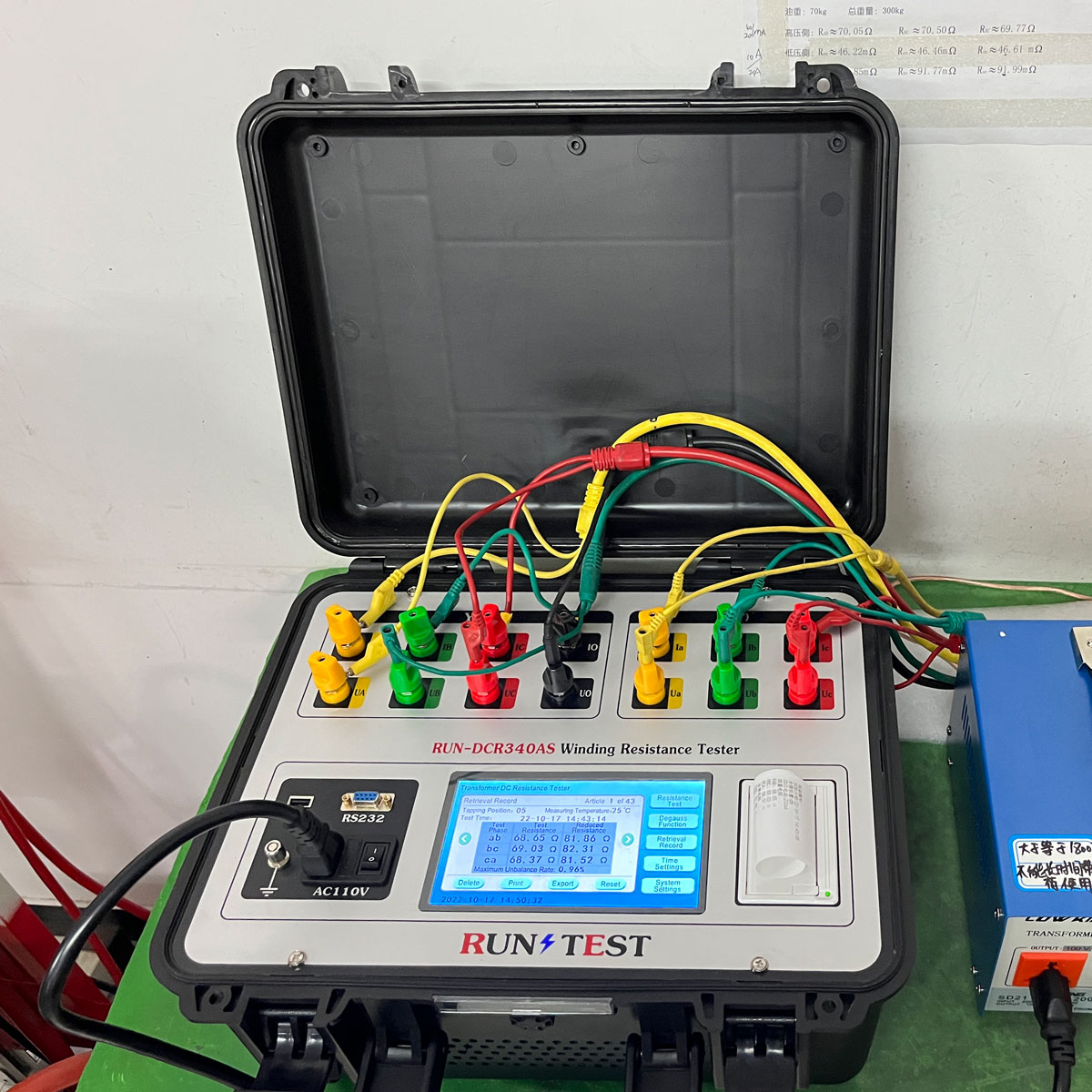
Comprobador de resistencia de bobinado trifásico 40A
-
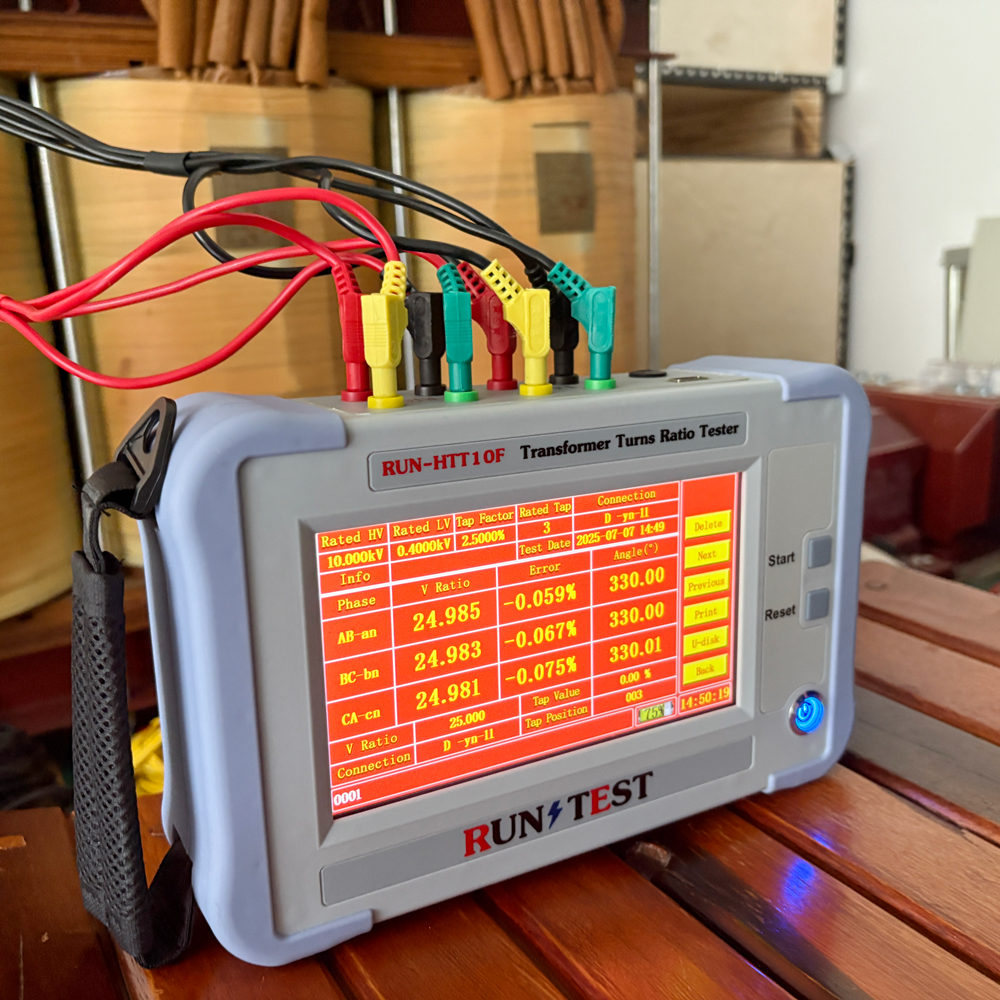
Comprobador portátil de la relación de transformación (batería incorporada)
-
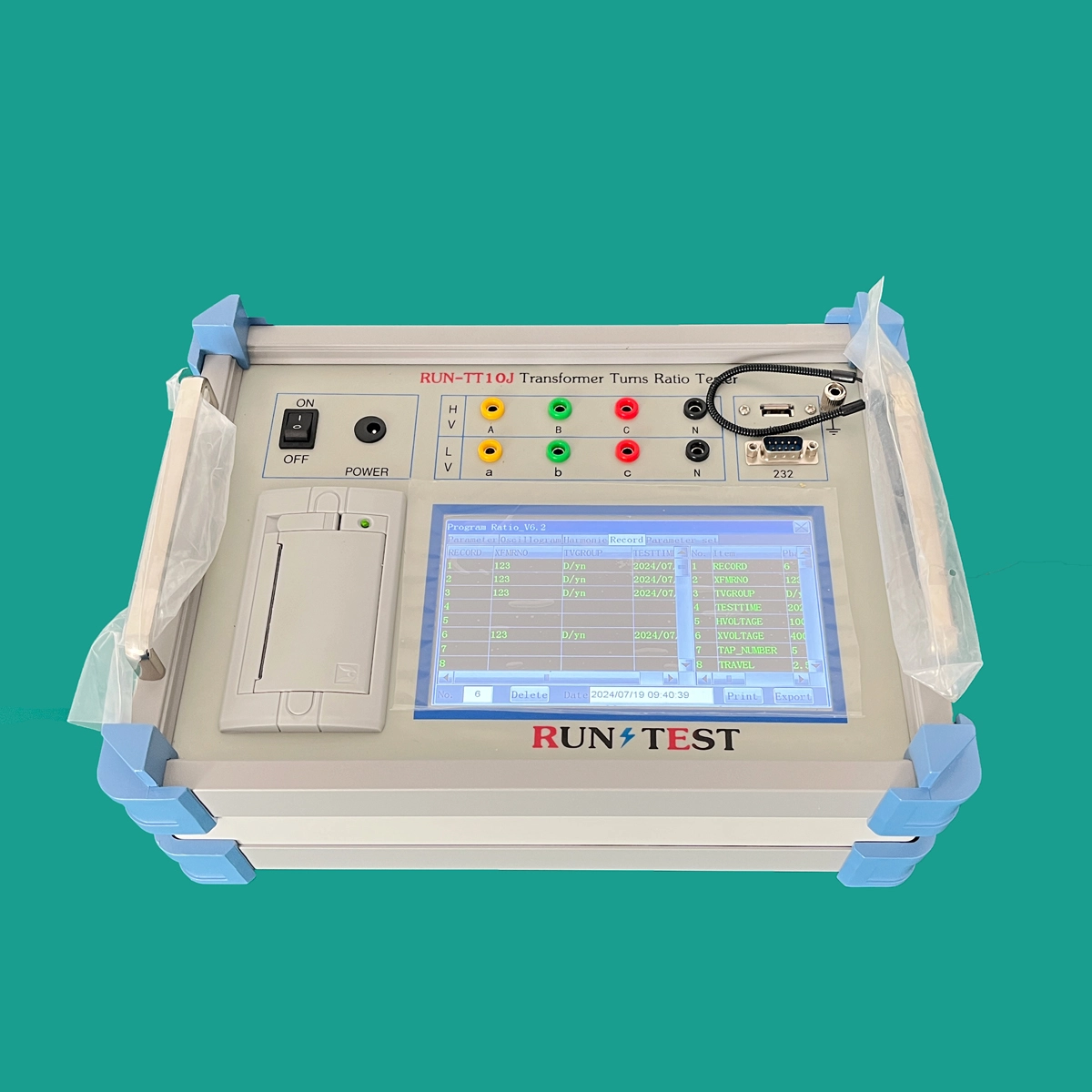
Nuevo CT Test Transformador Turns Ratio Tester
-
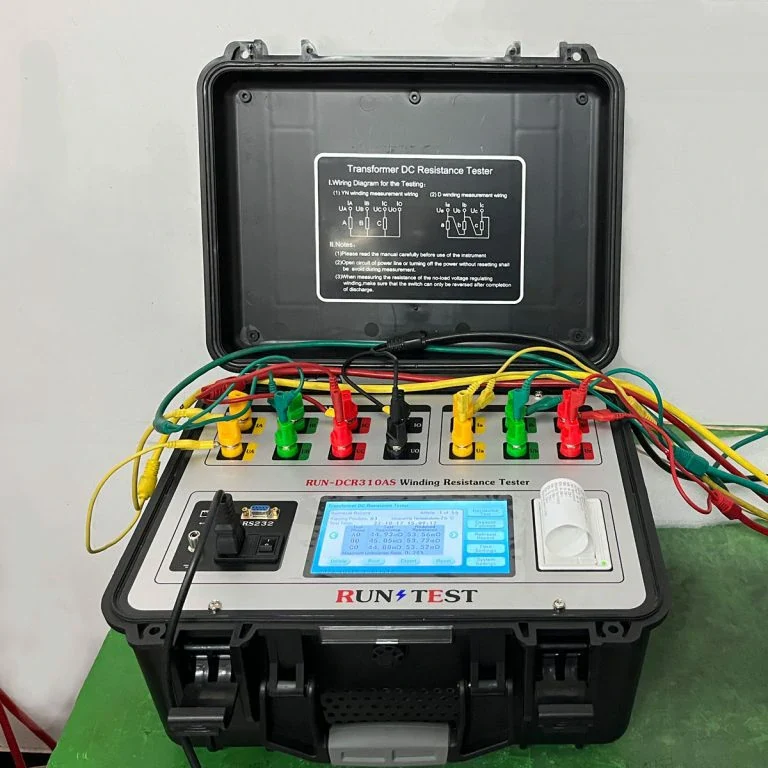
Comprobador de resistencia de devanados de transformadores de 10 A y 3 canales
-
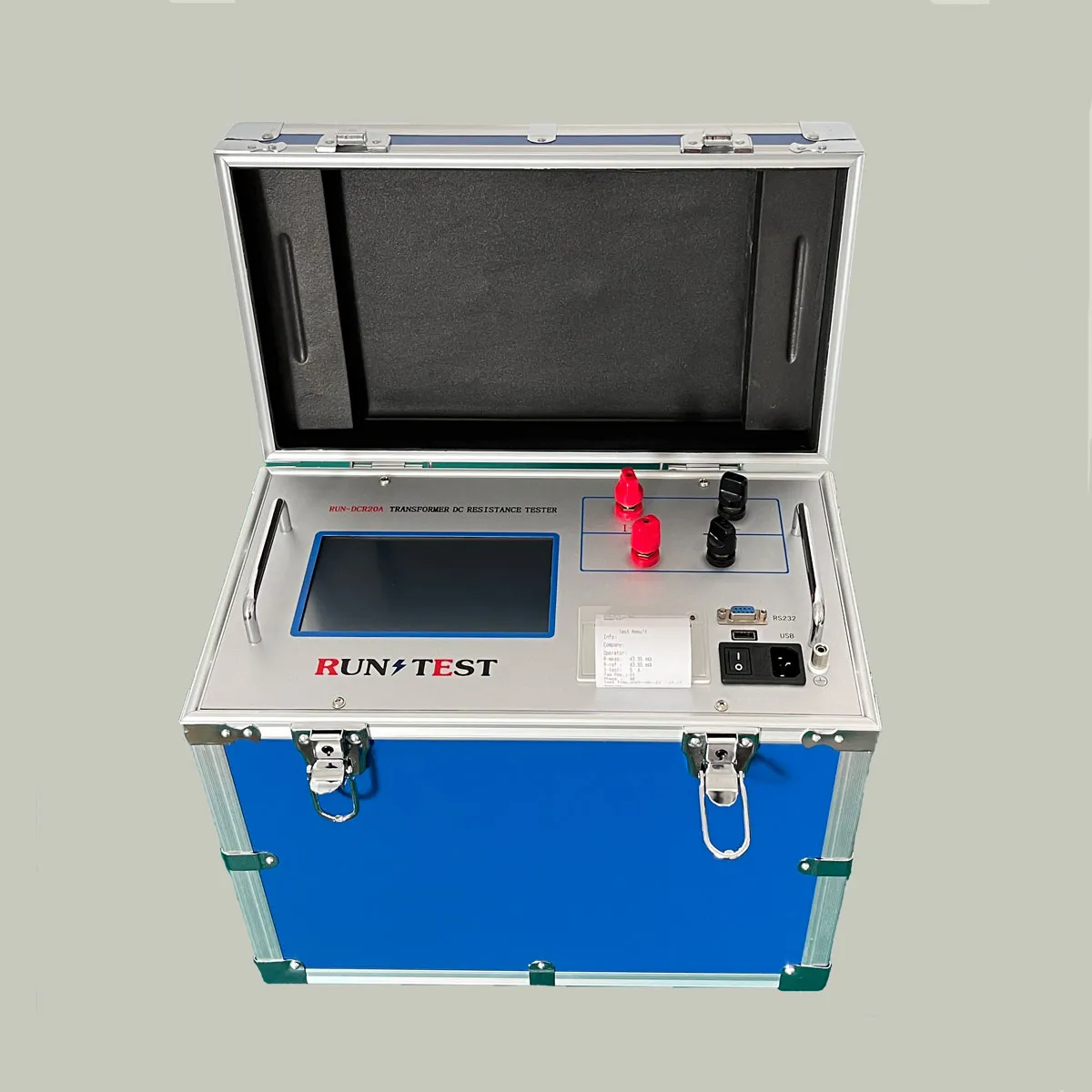
Comprobador de resistencia de CC monofásico de 20 A
-
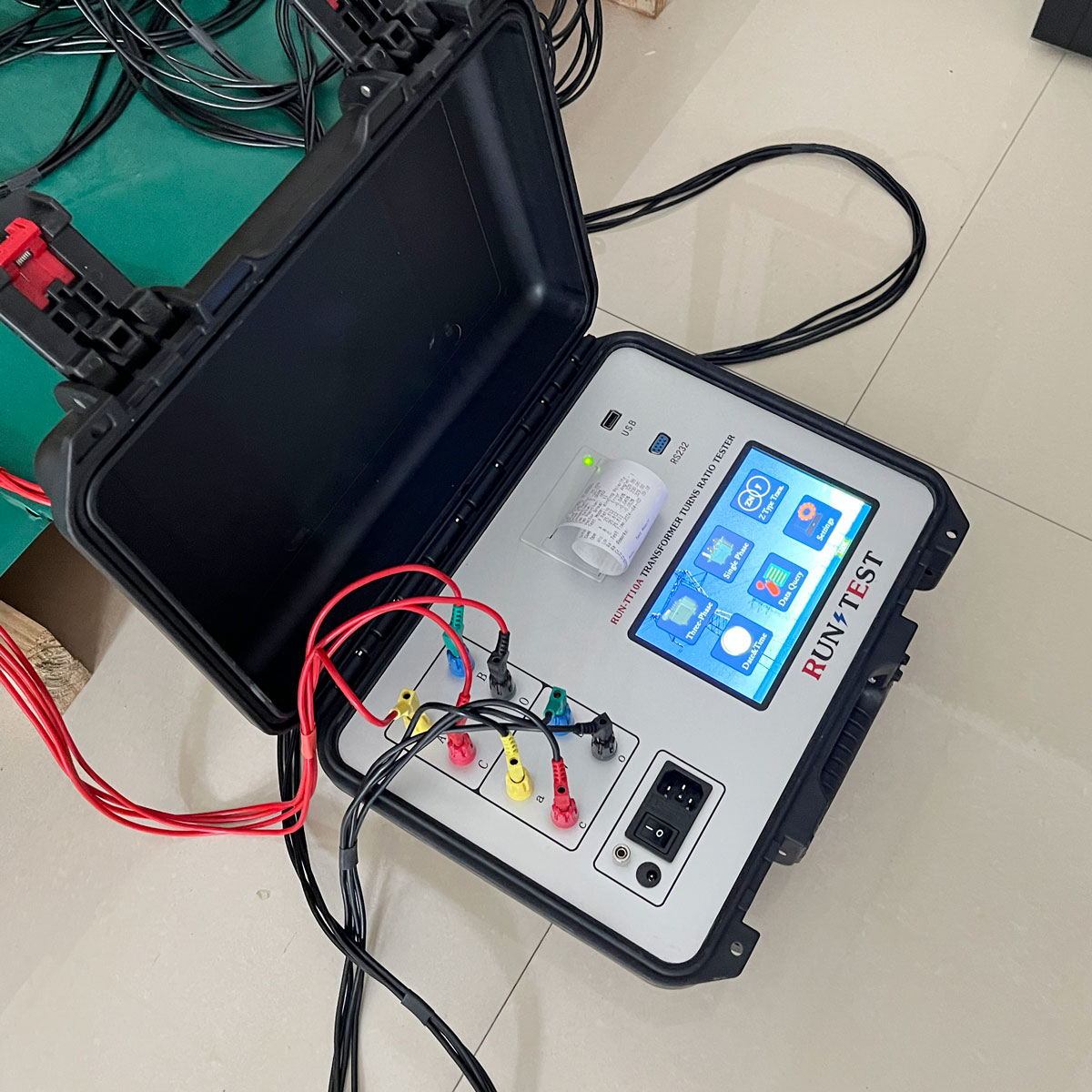
Comprobador de relación de transformación de baterías integrado
-
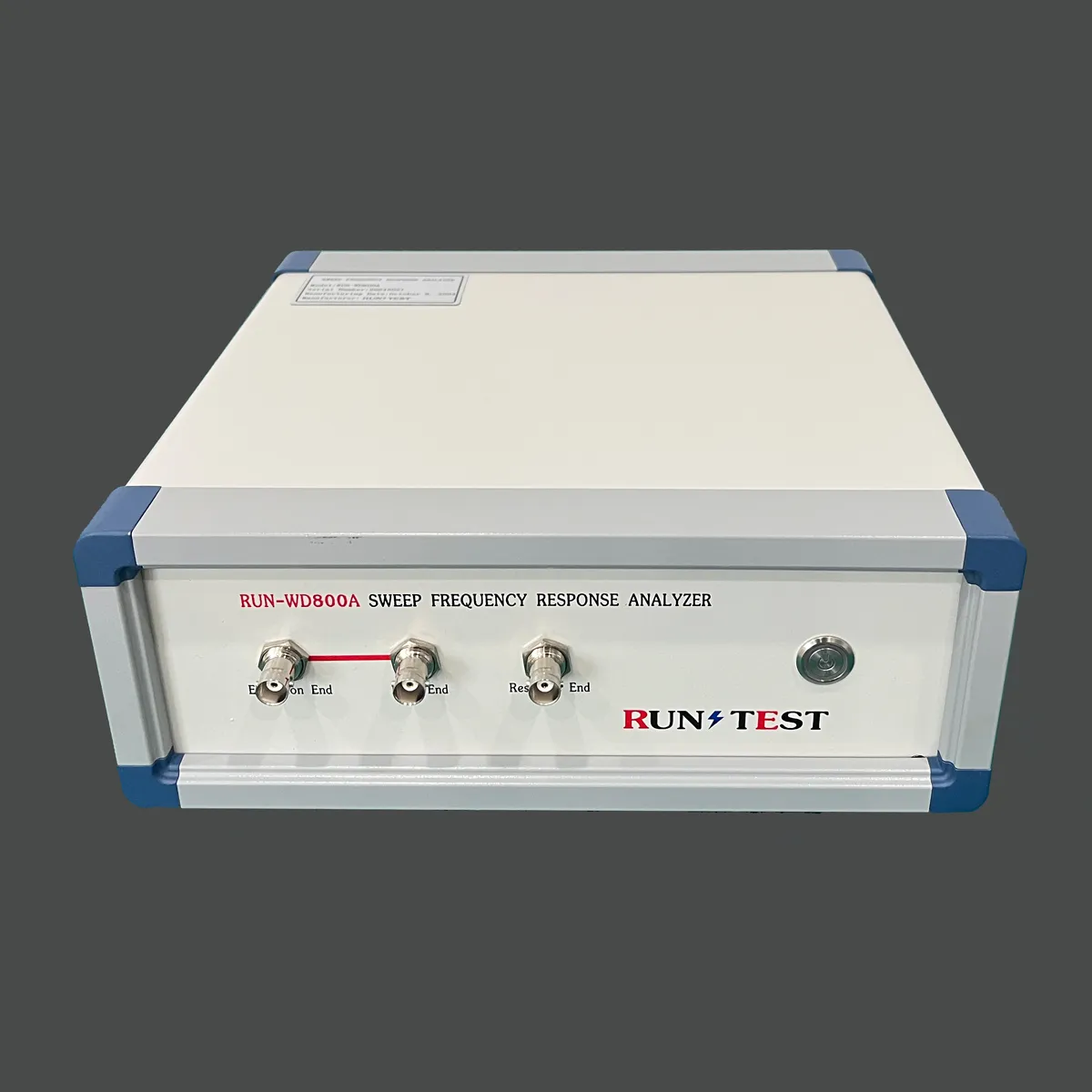
Analizador de respuesta en frecuencia de barrido Sfra para ensayos de deformación de devanados de transformadores
Browse by Test Method & Equipment Category
Pruebas de relación de vueltas (TTR) Testers
Engineered for high-precision ratio verification, phase error measurement, and vector group polarity testing during transformer commissioning and routine checks.
-
Core Capabilities: Single-phase and true three-phase excitation for complex vector groups (including Z-connected, phase-shifting, and Scott/Teaser transformers).
-
Technical Benchmarks: Ratios up to 10,000 with an ultra-high resolution of 0.0001, typical accuracy of 0.1%, and built-in automatic blind-test group recognition.
-
Field Safety: Integrated phase-reversal, short-circuit, and high-voltage excitation reverse-injection protection.
Winding Resistance Measurement
-
Core Capabilities: Output current options ranging from portable 10A, 20A, up to heavy-duty 40A systems with high compliance voltage for rapid core saturation.
-
Technical Benchmarks: Simultaneous three-phase injection with dynamic multi-channel resistance balancing, slashing testing cycles on autotransformers and large power transformers.
-
Safety Architecture: Advanced active Back-EMF (Electromotive Force) absorption circuits with synchronized audio-visual multi-stage discharge interlocks.
Insulation Power Factor & Tan Delta Test Equipment
Advanced high-voltage AC bridges designed to quantify dielectric losses, insulation aging, and localized moisture ingress within transformer insulation geometry and high-voltage bushings.
-
Core Capabilities: Integrated variable-frequency internal HV source delivering up to 10kV/12kV AC with frequency sweeping from 45Hz to 65Hz.
-
Technical Benchmarks: Employs advanced Dual-Frequency Shift (DFT) and digital filtering to completely suppress power-frequency electrostatic field interference in live 500kV substations. Supports UST (Ungrounded System Test) and GST (Grounded System Test) configurations.
Sweep Frequency Response Analyzers (SFRA)
Non-destructive mechanical transformer impedance tests and core/winding deformation diagnostic sets conforming to IEC 60076-18 and IEEE C57.149 guidelines.
-
Core Capabilities: Identifies internal mechanical shifts, axial winding displacement, hoop buckling, and core clamping failures post-fault or after heavy transportation.
-
Technical Benchmarks: Outstanding dynamic range exceeding 120dB to isolate low-amplitude resonance shifts. Precision frequency sweep from 10Hz to 2MHz with highly stable, log-spaced frequency points.
On-Load Tap Changer (OLTC) Testers
Specialized transient analyzers designed to measure transition time, transition resistance, and waveform continuity during tap changing sequences without dismantling the transformer grid architecture.
CT/PT Analyzers & Instrument Transformer Testers
Single-instrument metrological analysis for Current Transformers (CT) and Potential Transformers (PT) per IEC 61869-2/-3 and IEEE C57.13.
Core Transformer Specification Matrix for Test Engineering
| Diagnostic Metric | Industry Standard Norm | Key Instrumentation Parameter | Core Equipment Line |
| Turns Ratio & Phase Error | IEC 60076-1 / IEEE C57.12.90 | Ratio Range: 0.8 to 10,000; Resolution: 0.0001 | RT-TTR Series |
| DC Winding Resistance | IEEE C57.12.92 / NETA ATS | Max Output: 10A / 20A / 40A; Accuracy: 0.2% | RT-WDR Series |
| Dissipation Factor (Tan Delta) | DL/T 474.3 / IEC 60076-1 | Test Voltage: 10kV / 12kV; Capacitance Range: 3pF to 60,000pF | RT-TDT Series |
| Winding Deformation Diagnostics | IEC 60076-18 / IEEE C57.149 | Dynamic Range: More than 120dB; Sweep Freq: 10Hz to 2MHz | RT-SFRA Series |
Versatile Applications Across Global Power Sectors
Our industrial-grade substation transformer testing equipment is engineered to withstand harsh electromagnetic interference (EMI) environments, making it the preferred choice across diverse sectors:
-
Electrical Utilities & Substations: Delivering highly accurate field-ready solutions for preventive maintenance, power transmission reliability, and routine acceptance testing in EHV/UHV substations.
-
Transformer Manufacturers: Empowering factory quality control teams with high-precision instruments for comprehensive Factory Acceptance Testing (FAT).
-
Industrial Plants & Infrastructure: Providing compact, portable transformer testers for predictive maintenance in heavy manufacturing plants, data centers, and railway power networks.
-
Renewable Energy Facilities: Ensuring continuous grid-tie stability and condition assessment for step-up transformers in utility-scale solar substations and wind farms.
Transformer Testing Equipment Selection Guide
Selecting the appropriate transformer diagnostic tools requires aligning your technical requirements with substation voltage ratings, core topologies, and specific testing conditions. Use this engineering guide to identify the exact power transformer testing instruments for your fleet.
Step 1: Match Your Voltage Rating & MVA Capacity
The physical size and inductance of the transformer under test dictate the output power and safety margins needed from your substation transformer testing equipment.
-
For Distribution Transformers (< 35kV, Lower MVA):
-
Efficiency and mobility are paramount. Opt for portable transformer testers with integrated lithium batteries. A 10A winding resistance tester and a handheld single-phase/three-phase TTR meter provide ample capacity for rapid field testing.
-
-
For Transmission & Substation Power Transformers (110kV to 500kV+, High MVA):
-
High-inductance windings demand heavy-duty diagnostic currents to rapidly saturate the core. Select a 40A three-channel transformer winding resistance tester to slash saturation times. Insulation testing requires a dedicated 10kV/12kV Tan Delta test set with strong electromagnetic immunity to isolate high-voltage grid interference.
-
Step 2: Determine Phase Topology & Testing Speed
-
Single-Phase Excitation vs. True Three-Phase Excitation:
-
If your team regularly tests complex vector groups (e.g., Scott, Teaser, or Z-connected phase-shifting transformers), standard single-phase ratio meters will fail. Ensure your transformer tester meter supports true three-phase simultaneous excitation to automatically recognize vector groups and eliminate phase-calculation errors during transformer commissioning.
-
-
Simultaneous Winding Measurement:
-
For routine grid maintenance, selecting a winding resistance tester that supports simultaneous three-phase magnetic saturation reduces field manual lead changes and cuts overall substation downtime by up to 70%.
-
Step 3: Align with Asset Lifecycle & Diagnostic Goals
Choose your instrumentation package based on whether you are executing routine acceptance testing, predictive maintenance, or emergency post-fault analysis.
-
Factory Acceptance Testing (FAT) & Commissioning:
-
Requires absolute metrological precision and standard compliance documentation. Ensure your transformer testing equipment factory supplies instruments with traceable calibration reports verifying a baseline ratio accuracy of 0.1% and resistance resolutions down to 01 μΩ.
-
-
Post-Fault & Transportation Integrity Inspection:
-
If a transformer has sustained a severe through-fault or has just arrived via heavy ocean freight, standard electrical tests cannot verify internal mechanical security. You must deploy a Sweep Frequency Response Analyzer (SFRA) to execute a prueba de impedancia del transformador and evaluate winding deformation or core displacement.
-
Quick Selection Matrix for Procurement Leads
| Engineering Task | Critical Feature to Look For | Recommended System Type |
| Rapid field ratio and polarity check on distribution networks | Handheld form-factor, built-in battery, 0.8 to 10,000 ratio range | Portable Handheld TTR Tester |
| Measuring winding resistance on massive autotransformers | 20A/40A constant-current output, multi-channel simultaneous balancing, active Back-EMF discharge protection | Three-Phase 40A DC Winding Resistance Analyzer |
| Assessing bushing insulation degradation and moisture ingress | Variable frequency source (45Hz–65Hz), UST/GST measurement modes, automatic interference suppression | 12kV Insulation Power Factor & Tan Delta Test Set |
| Diagnosing mechanical core shifts after a short-circuit fault | Dynamic range > 120dB, frequency sweep up to 2MHz, compliance with IEC 60076-18 | Core & Winding SFRA Deformation Tester |
Frequently Asked Questions - Transformer Testing
Q1: What core diagnostic equipment is required for power transformer testing?
A complete transformer diagnostic layout typically requires a Transformer Turns Ratio (TTR) tester for voltage ratio verification, a DC winding resistance tester for contact and joint evaluation, a Tan Delta test set for insulation power factor analysis, and a Sweep Frequency Response Analyzer (SFRA) to diagnose mechanical winding deformation.
Q2: Why is winding resistance testing critical for power transformers?
Winding resistance testing detects critical internal anomalies such as loose internal connections, broken conductor strands, high contact resistance in On-Load Tap Changers (OLTC), and faulty brazed joints. It ensures the winding integrity can withstand nominal current loads without localized overheating.
Q3: How does Sweep Frequency Response Analysis (SFRA) detect winding deformation?
SFRA acts as an "electro-mechanical fingerprint" of the transformer. By injecting a low-voltage AC signal across a frequency sweep (typically 10 Hz to 2 MHz) and measuring the transfer function, any mechanical shift in the windings or core changes the internal capacitance and inductance, resulting in a frequency response curve shift compared to baseline records.
Q4: Can transformer testing equipment operate safely in high-interference HV substations?
Yes. Professional substation transformer testing equipment features advanced electromagnetic compatibility (EMC) engineering. For instance, our Tan Delta testers utilize frequency-shift technology (e.g., 45Hz/55Hz or 55Hz/65Hz) to completely isolate and suppress power-frequency electrostatic interference common in live high-voltage environments.
Q5: Do your transformer testing instruments comply with IEC and IEEE standards?
Absolutely. As an established transformer testing equipment factory, all our instruments are designed, calibrated, and manufactured in strict compliance with international engineering metrics, including IEC 60076, IEEE C57.12.90, and ANSI/NETA acceptance testing criteria.
Q6: What is a transformer impedance test and why is it performed?
A transformer impedance test measures the short-circuit impedance of the transformer windings. It is performed to identify severe winding deformations or displacement that may have occurred during terminal short-circuit faults or rough transit handling.
Q7: How often should transformers undergo diagnostic condition assessments?
While testing frequency depends on utility policies and asset criticality, standard industrial practices recommend diagnostic testing during commissioning, routine intervals (every 1 to 3 years for critical substation assets), and immediately following any major close-in through-fault event.
About RUN TEST ELECTRIC
Run Test Electric Manufacturing Co., Ltd., situated in the Dongrun Science Park of the Baoding High-Tech Development Zone, Hebei, China, is a premier, high-tech industrial enterprise specializing in the R&D, manufacturing, and global distribution of high-voltage electrical test equipment. Backed by decades of metrological expertise and engineering innovation, we have established ourselves as a globally trusted resistance tester supplier and turnkey substation diagnostics partner.
Our state-of-the-art manufacturing facility features advanced quality control workflows, precision calibration laboratories, and heavy industrial-grade environmental testing cells. This infrastructure empowers our technical teams to engineer highly reliable instrumentation capable of enduring severe electromagnetic interference and harsh field conditions. From national grid utilities and massive power generation plants to transformer OEMs and third-party commercial calibration labs across Europe, the Americas, the Middle East, and Southeast Asia, Run Test Electric is the definitive benchmark for electrical asset integrity and power grid reliability.