
test de haute tension
Le contrôle de la haute tension dans les essais électriques est un processus utilisé pour vérifier la résistance de l'isolation et l'intégrité générale des composants, systèmes ou équipements électriques. L'objectif est de s'assurer que ces systèmes peuvent fonctionner en toute sécurité dans des conditions de fonctionnement normales, y compris en cas de surtensions ou de pointes de tension potentielles. Testeur de haute tension aide à détecter les faiblesses ou les défauts des matériaux d'isolation ou de la construction des équipements électriques, réduisant ainsi le risque de défaillance en cours de fonctionnement.
Chez RUN TEST, nous proposons une large gamme d'équipements de test haute tension destinés aux services publics, aux installations industrielles, aux entrepreneurs en électricité, aux laboratoires d'essais et aux équipes de maintenance des réseaux électriques. Notre gamme de produits comprend des testeurs d'isolation VLF, des testeurs d'isolation CC, des générateurs haute tension CA, ainsi que d'autres solutions pour les essais de câbles, les essais de résistance d'isolation et les diagnostics haute tension industriels. Pour les clients à la recherche d'une gamme plus étendue de équipement d'essai électrique, RUN TEST propose également des services de contrôle des transformateurs, de mesure de résistance, de contrôle des disjoncteurs et d'autres solutions de mesure électrique.
-
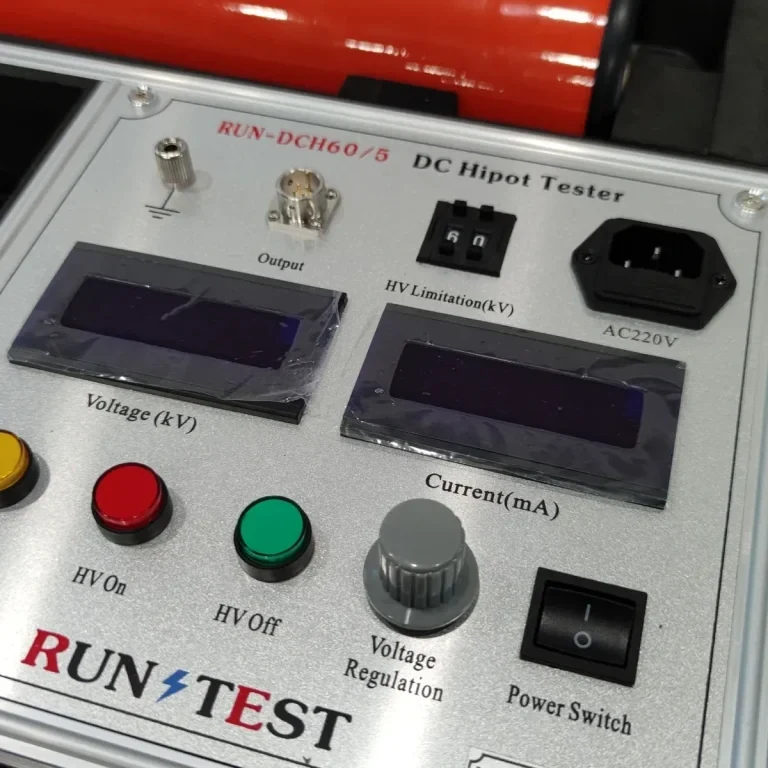
60kv 5mA DC High Voltage Generator Hipot Tester
-
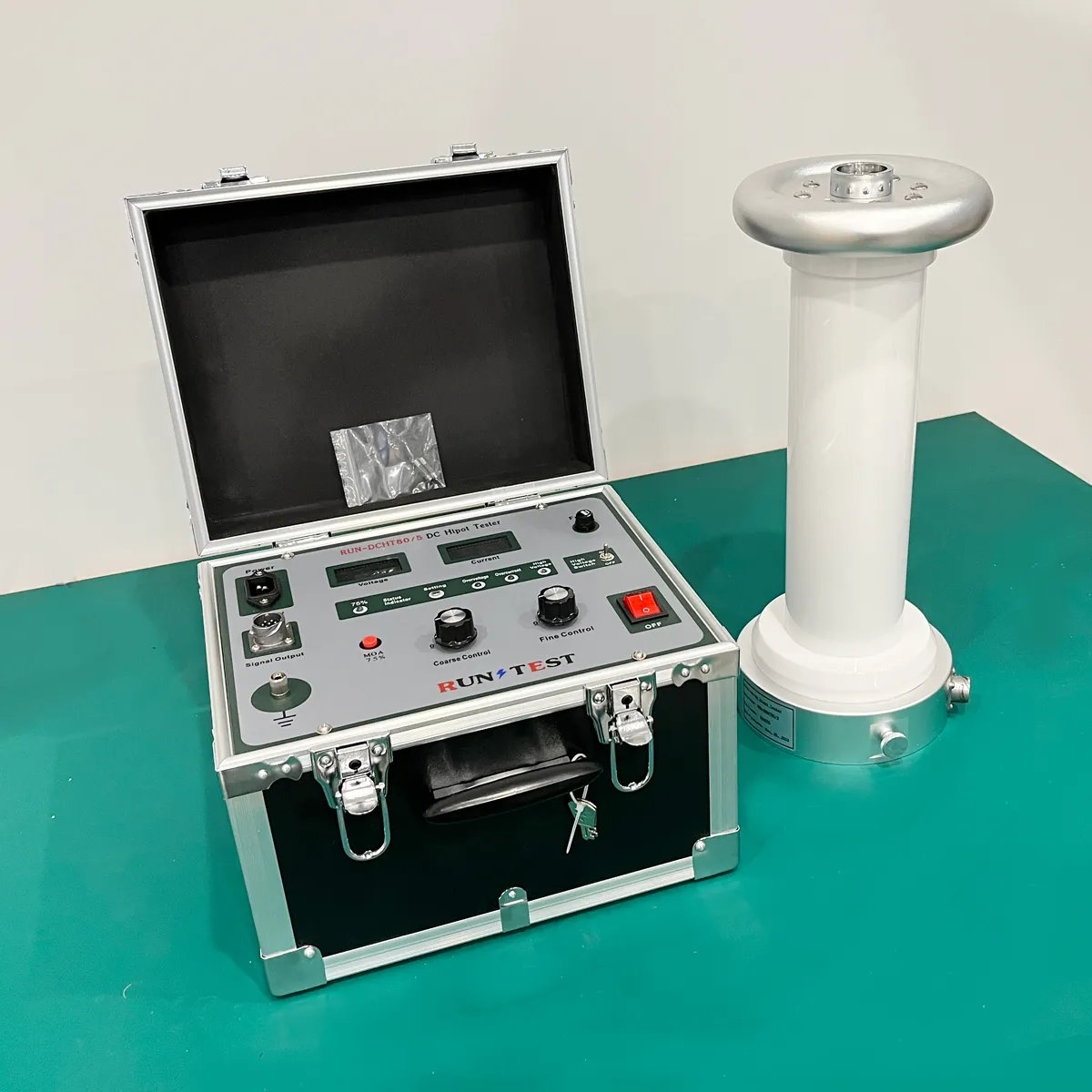
Testeur Hipot 80kv 5mA DC
-
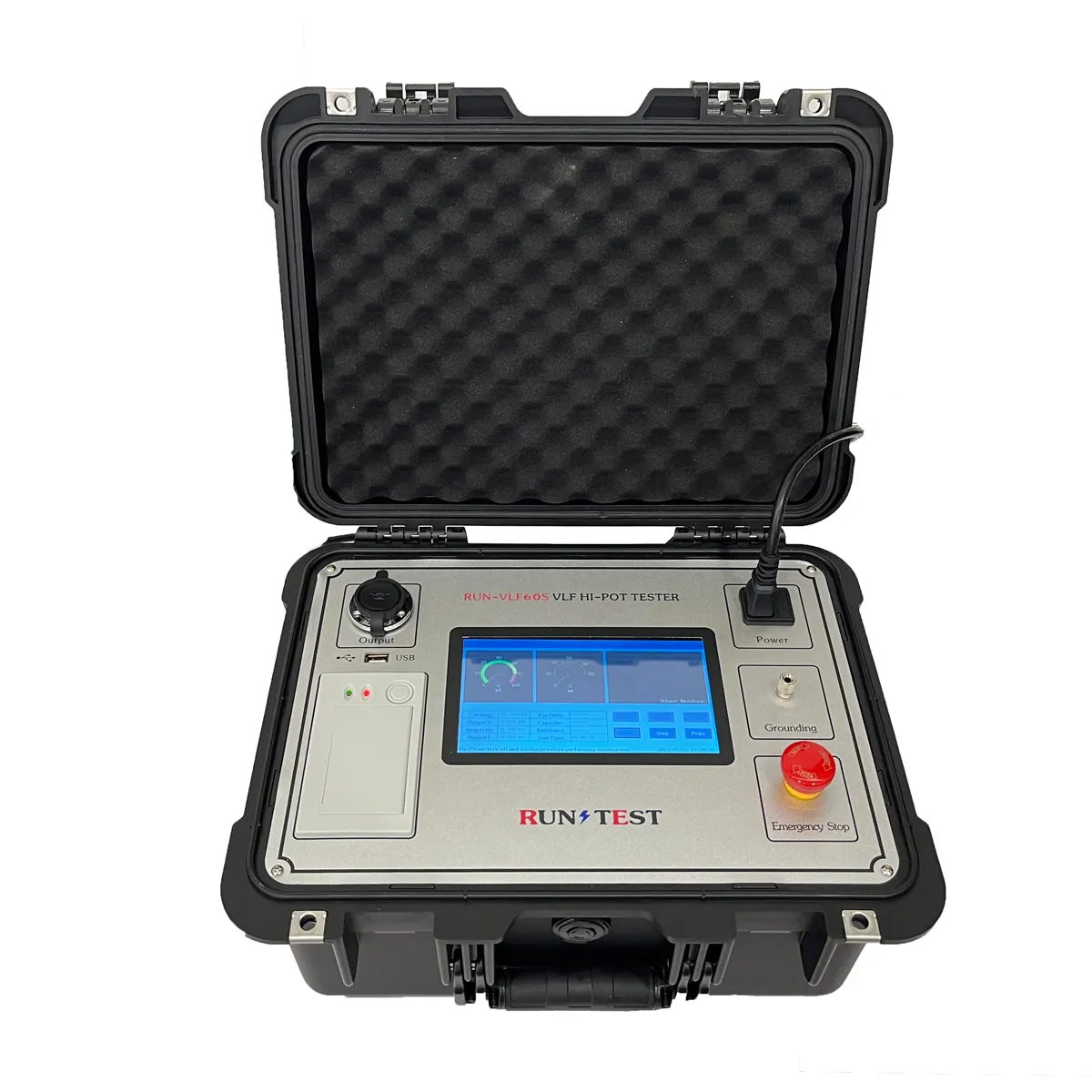
60KV VLF Cable Testing Hipot Tester
À quoi sert un testeur haute tension ?
Un testeur d'équipements haute tension est conçu pour évaluer si un équipement électrique est capable de résister en toute sécurité à des tensions élevées sans rupture d'isolation, décharge de surface ou courant de fuite anormal. Ces instruments sont couramment utilisés dans les réseaux de transport d'électricité, les sous-stations, la fabrication de câbles, la maintenance électrique et les travaux de mise en service industrielle.
Selon l'application, un testeur de tension pour réseaux haute tension peut être utilisé pour :
- essais de résistance à la tension des câbles
- Vérification de l'isolation des transformateurs et des appareillages de commutation
- essais des parafoudres
- Diagnostic de l'isolation des générateurs et des moteurs
- maintenance préventive des installations moyenne et haute tension
- usine et terrain essais à haute puissance des systèmes d'isolation électrique
Types d'essais à haute tension
1. Test Hipot (test de haut potentiel)
Lors d'un essai HIPOT, une haute tension est appliquée aux conducteurs de l'équipement testé afin de vérifier si l'isolation est capable de résister à la contrainte de tension spécifiée. Si l'isolation ne tient pas, un courant de fuite ou un courant de claquage apparaîtra, indiquant un défaut, une faiblesse, un problème de contamination ou une défaillance de l'isolation de l'équipement.
Les essais Hipot sont largement utilisés pour les câbles d'alimentation, les appareillages de commutation, les moteurs, les transformateurs et autres équipements électriques nécessitant une vérification de la résistance de l'isolation. Il s'agit de l'une des méthodes les plus couramment utilisées avec un testeur haute tension industriel.
2. Test d'impulsion de foudre
L'essai de choc de foudre a pour objectif de simuler les effets des coups de foudre et des surtensions transitoires sur les équipements électriques. Cet essai permet de déterminer si l'équipement est capable de résister à des surtensions soudaines sans subir de dommages au niveau de l'isolation ni de défaillance interne.
Les essais d'impulsions de foudre revêtent une importance particulière pour les transformateurs, les appareillages électriques et les systèmes haute tension exposés à des conditions d'exploitation en extérieur ou à des surtensions de commutation.
Applications des essais à haute tension
Les essais haute tension sont largement utilisés dans les secteurs de la production, du transport et de la distribution d'électricité, ainsi que dans la maintenance électrique industrielle. Parmi les applications typiques, on peut citer :
- Transformateurs de puissance: Nous pourrions l'utiliser pour garantir que l'isolation reste intacte.
- Appareillage: Nous pourrions vérifier son comportement dans des conditions de haute tension.
- Câbles: Nous pourrions tester la résistance de l'isolation, en particulier pour les lignes de transmission à longue distance.
- Moteurs et générateurs: Nous avons pu évaluer l'état de leurs systèmes d'isolation.
Types d'essais haute tension et équipements recommandés
| Type de test | Objectif principal | Équipements types soumis aux essais | Testeur haute tension recommandé |
|---|---|---|---|
| Test Hipot | Vérifier la résistance diélectrique de l'isolation sous haute tension | Câbles, moteurs, transformateurs, appareillages de commutation | Testeur d'isolation VLF, testeur d'isolation CA/CC |
| Test d'impulsion de foudre | Simuler des conditions de foudre ou de surtension | Transformateurs, appareils haute tension, équipements électriques d'extérieur | système d'essais par impulsions / banc d'essais haute tension dédié |
| Essai de tension de tenue des câbles | Vérifier l'état de l'isolation des câbles avant la mise en service ou après une intervention de maintenance | Câbles d'alimentation, réseaux de câbles moyenne et haute tension | Testeur d'isolation de câbles VLF, générateur de haute tension en courant continu |
| Test de haute tension DC | Appliquer une tension continue pour l'évaluation de l'isolation et les essais de résistance | Câbles, parafoudres, composants électriques | Testeur d'isolation CC, générateur portable de haute tension CC |
| Essai d'isolation industrielle | Évaluer l'état de l'isolation des équipements de l'usine et des installations sur site | Moteurs, générateurs, appareillages de commutation, installations électriques industrielles | testeur industriel haute tension |
Équipements d'essai haute tension à la une
RUN TEST propose une gamme complète de testeurs haute tension pour les essais sur site et en usine. Cette catégorie comprend des produits tels que :
- Testeur d'isolation VLF 50 kV
- Testeur d'isolation VLF et CC 40 kV
- Testeur d'isolation à courant continu 120 kV, 5 mA pour câbles
- Testeur d'isolation de câbles VLF à 80 kV
- Testeur d'isolation VLF 40 kV
- Générateur de tension d'essai à courant alternatif à très basse fréquence de 80 kV
- Testeur d'isolation 5 kV CA / 6 kV CC
- Générateur de haute tension électrique DC Testeur de Hipot DC
- Générateur portable tout-en-un de haute tension en courant continu pour parafoudre
Ces produits sont adaptés aux essais de câbles, à la maintenance des sous-stations, à l'entretien des transformateurs, à la vérification de l'isolation dans le secteur industriel, ainsi qu'à d'autres applications d'essais à haute puissance nécessitant une sortie stable et des diagnostics d'isolation fiables.
Comment choisir le testeur haute tension adapté
La droite Testeur de haute tension Cela dépend de l'objet à tester, de la tension de sortie requise et du type d'essai électrique que vous devez réaliser. Certains projets nécessitent des essais VLF pour l'isolation des câbles, tandis que d'autres requièrent une sortie haute tension en courant continu pour tester les parafoudres ou vérifier la résistance générale de l'isolation.
| Si vous avez besoin de… | Équipement recommandé | Pourquoi ce modèle est-il adapté ? |
|---|---|---|
| Contrôle de l'isolation des câbles à moyenne et haute tension | Testeur d'isolation de câbles VLF | Convient aux essais de résistance des câbles, avec une faible consommation d'énergie et une évaluation efficace de l'isolation |
| Réaliser des essais de tension de tenue (hipot) généraux en courant alternatif et continu | Testeur Hipot | Utilisé pour les essais de résistance d'isolation sur les appareillages de commutation, les moteurs, les câbles et les ensembles électriques |
| Essais sur les parafoudres et certaines applications en courant continu | Générateur de haute tension DC | Fournit une tension de sortie continue stable pour les essais sur site à haute tension |
| Vérifier les performances d'isolation des installations électriques industrielles | Testeur industriel haute tension | Convient aux équipes de maintenance, aux essais d'installations et aux travaux de mise en service |
| Réaliser des diagnostics haute tension dans les sous-stations ou les réseaux électriques | Testeur d'équipements haute tension avec une plage de sortie adaptée | Permet de tester les transformateurs, les appareillages de commutation, les câbles et d'autres équipements électriques |
Considérations de sécurité relatives aux essais haute tension
Les essais haute tension comportent des risques électriques importants ; il est donc impératif de toujours respecter les consignes de sécurité. Une préparation adéquate, le port d'équipements de protection et la mise en œuvre de procédures d'essai contrôlées sont essentiels pour réduire les risques de choc électrique, d'arcs électriques et de dommages matériels.
Parmi les principales mesures de sécurité, on peut citer :
- mettre correctement à la terre l'équipement et le système de test
- en portant un équipement de protection individuelle (EPI), notamment des gants isolants et des chaussures de sécurité
- signaler la zone d'essai comme zone dangereuse
- utiliser à distance les équipements de test, dans la mesure du possible
- respecter les procédures de mise hors service, de vidange et de nettoyage du site avant et après les essais
Les essais haute tension sont indispensables pour garantir que les systèmes électriques restent sûrs, fiables et capables de fonctionner dans des conditions de tension exigeantes.
Pourquoi les essais haute tension sont-ils essentiels dans les systèmes industriels et les réseaux de distribution d'énergie ?
Les essais haute tension constituent un élément essentiel de la maintenance préventive, de la mise en service et de l'assurance qualité dans les réseaux électriques. Ils permettent aux opérateurs d'identifier les faiblesses de l'isolation avant qu'une défaillance ne survienne, de vérifier l'état des câbles et des appareillages de commutation, et de s'assurer que les équipements sont capables de supporter les contraintes d'exploitation prévues.
Pour les services publics, les entrepreneurs en électricité, les équipes de maintenance industrielle et les laboratoires d'essais, un testeur haute tension adapté peut améliorer la sécurité, réduire les pannes imprévues et contribuer à une fiabilité accrue des systèmes dans les sous-stations, les usines, les réseaux de câbles et les infrastructures de distribution d'électricité.
Foire aux questions sur les équipements d'essai haute tension
À quoi sert un testeur haute tension ?
A testeur haute tension Cette technique sert à vérifier la résistance d'isolation et l'intégrité électrique en appliquant une tension élevée à des câbles, des transformateurs, des appareillages de commutation, des moteurs et d'autres équipements électriques. Elle permet de détecter les défauts d'isolation, les chemins de fuite et les points faibles avant qu'une défaillance ne se produise.
Quelle est la différence entre un testeur d'isolation VLF et un testeur d'isolation à courant continu ?
Un testeur d'isolation VLF est couramment utilisé pour les essais de résistance de l'isolation des câbles avec une sortie à très basse fréquence, tandis qu'un testeur d'isolation à courant continu applique une haute tension en courant continu pour l'évaluation de l'isolation, les essais de parafoudres et d'autres applications haute tension.
Quels équipements peuvent être testés à l'aide d'un testeur d'équipements haute tension ?
Parmi les équipements généralement soumis à ces essais, on trouve notamment les câbles d'alimentation, les transformateurs, les appareillages de commutation, les moteurs, les générateurs, les parafoudres et d'autres systèmes électriques à moyenne ou haute tension.
Un appareil de test à courant élevé est-il la même chose qu'un testeur haute tension ?
Non. Un système de test à courant fort sert principalement à injecter ou à mesurer des courants élevés dans des équipements électriques, tandis qu'un testeur haute tension est conçu pour appliquer une tension élevée dans le cadre d'essais d'isolation et de résistance. Dans certains programmes de maintenance, ces deux méthodes de test peuvent être utilisées conjointement, en fonction de l'équipement et de l'objectif du test.