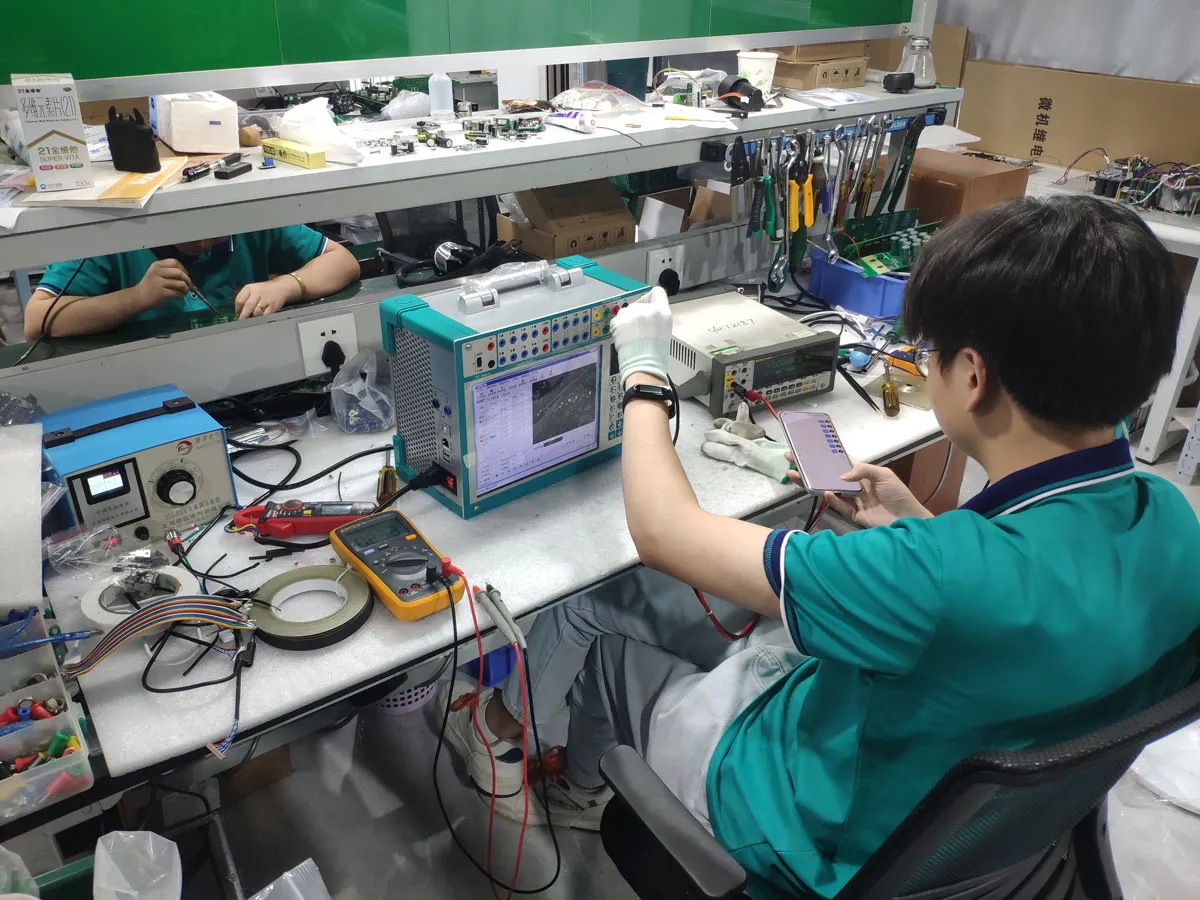
Test de relais de protection triphasé Test de relais d'injection de courant secondaire Testeur de protection
Description succincte :
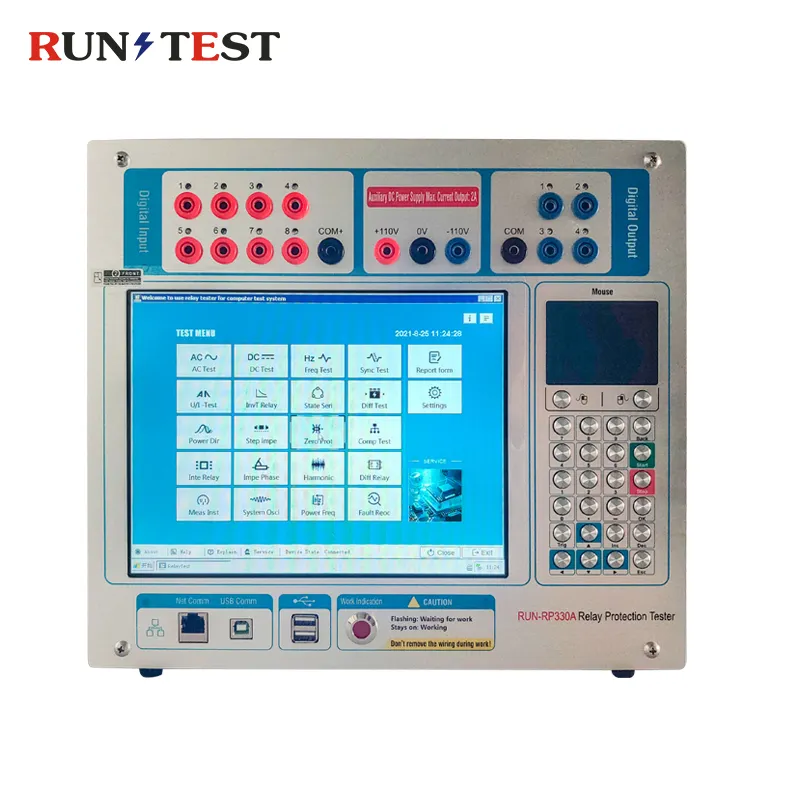
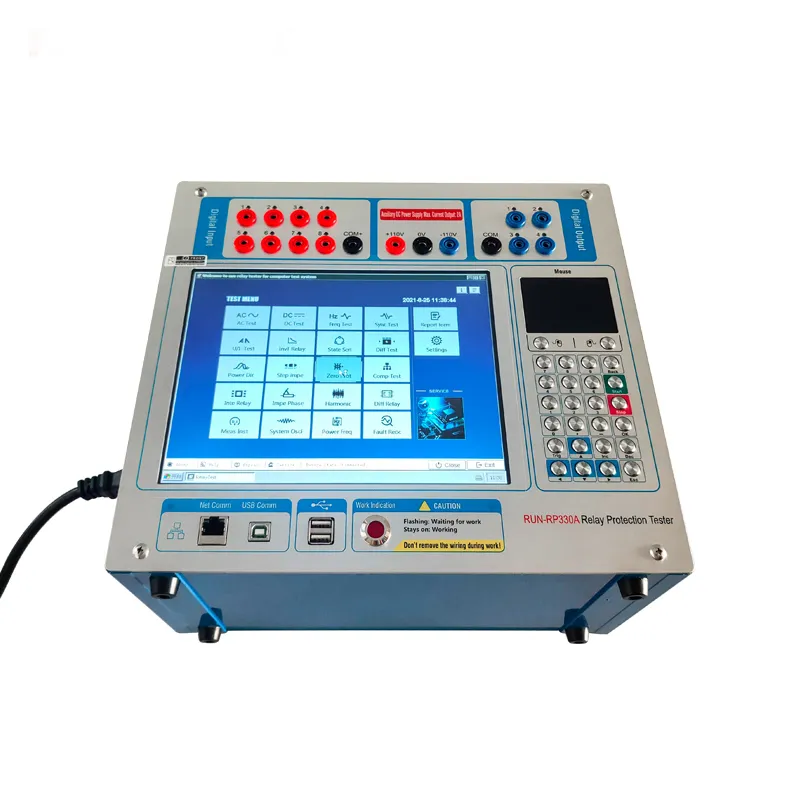
ITEM: RUN-RP330A
The relay tester can test various AC and DC, current, voltage, intermediate, self-holding, signal and other single relays and the entire group.
High degree of intelligence, Comprehensive self-check, self-protection function
Advantage: 1. CE Certified and One-stop solution for relay protection
2. One year warranty and fast shipping
3. light weight, Instrument net weight: 12kg
4. Quality supplier and service provider of State Grid


Banc d'essai d'injection de courant secondaire triphasé micro-ordinateur/Testeur de relais de protection triphasé portable/Secondaire Relais Tester
Le présent Testeur de relais secondaire est certifié par le certificat CE.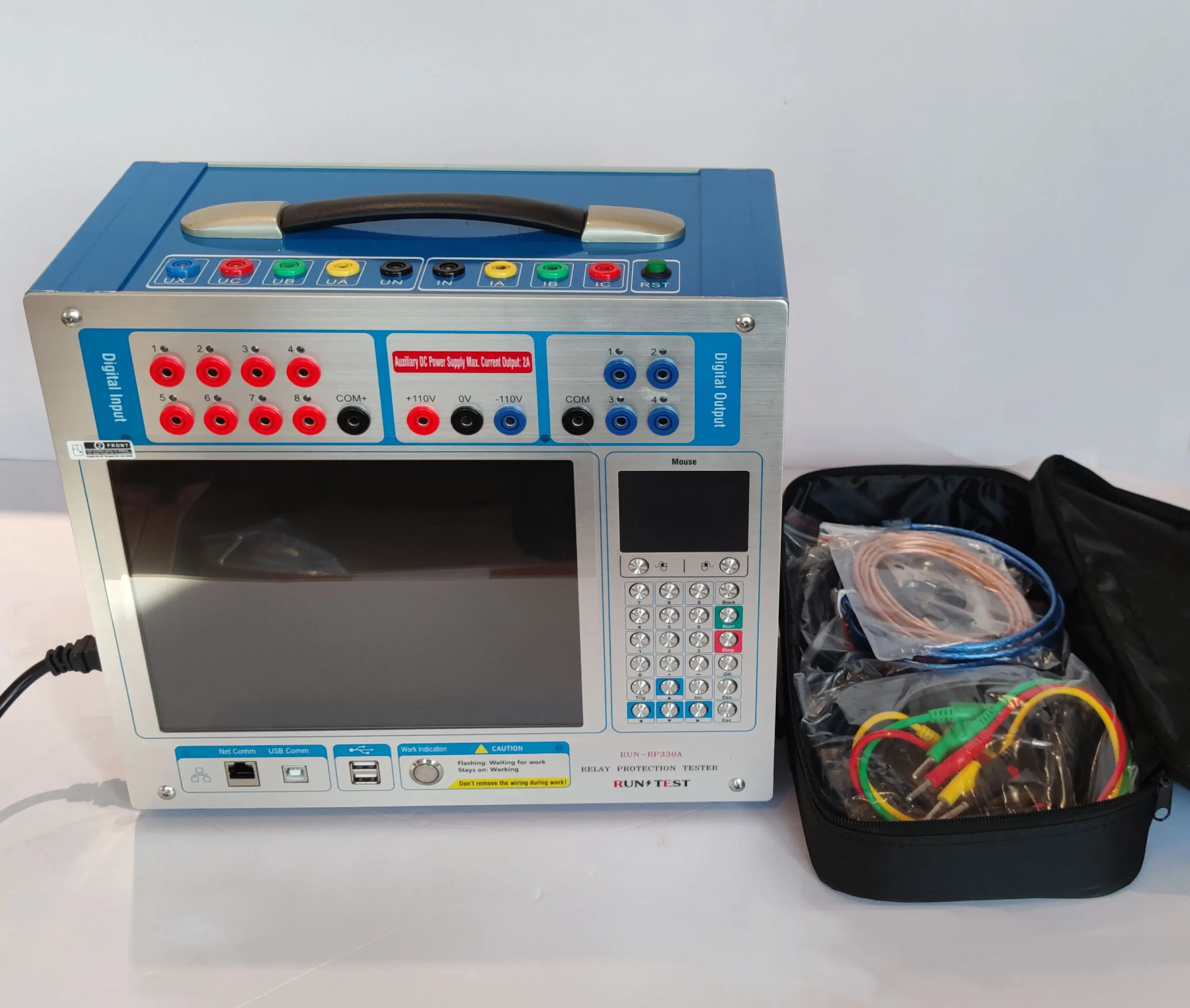
 Kit de test des relais triphasés
Paramètres de l'ensemble de tests du relais d'injection secondaire
Courant alternatif Sortie
| Sortie de courant monophasé (RMS) | 0 -- 30A / phase, précision : 0,2% ± 5mA |
| Trois courants en sortie parallèle (RMS) | 0 -- 90A / sortie parallèle triphasée en phase |
| Cycle de travail | 10A |
| Puissance de sortie maximale par phase | 300VA |
| Puissance de sortie maximale du courant parallèle triphasé | 800VA |
| Temps de fonctionnement max. admissible de la sortie du triple courant parallèle | 10s |
| Gamme de fréquences | 0 -- 1000Hz, précision 0,01Hz |
| Nombre harmonique | 2 à 20 fois |
| Phase | 0-360 o Précision : 0,1 o |
Courant continu Sortie
| Sortie de courant continu | 0--± 10A / phase, précision : 0,2% ± 5mA |
Sortie de tension AC
| Sortie de tension monophasée (RMS) | 0 -- 125V / phase, précision : 0.2% ± 5mv |
| Sortie de la tension de ligne (RMS) | 0--250V |
| Tension de phase / tension de ligne puissance de sortie | 75VA/100VA |
| Gamme de fréquences | 0 -- 1000Hz, précision : 0,001Hz |
| Onde harmonique | 2 à 20 fois |
| Phase | 0-360 o Précision : 0,1 o |
Sortie de tension continue
| Amplitude de la tension de sortie monophasée | 0--± 150V, précision : 0,2% ± 5mv |
| Amplitude de sortie de la tension de ligne | 0--±300V |
| Tension de phase / tension de ligne puissance de sortie | 90VA/180VA |
Nombre d'interrupteurs& Plage de temps de mesure
| Borne d'entrée du commutateur | 8 canaux |
| Contact avec l'air | 1 -- 20 mA, 24 V, sortie active interne de l'appareil |
| Inversion potentielle | Passive contact: low resistance short circuit signal Active contact: 0-250V DC |
| Borne de sortie du commutateur | 4 paires, sans contact, pouvoir de coupure : 110V / 2A, 220V / 1A |
Autres
| Délai | 1ms -- 9999s, précision de mesure : 1ms |
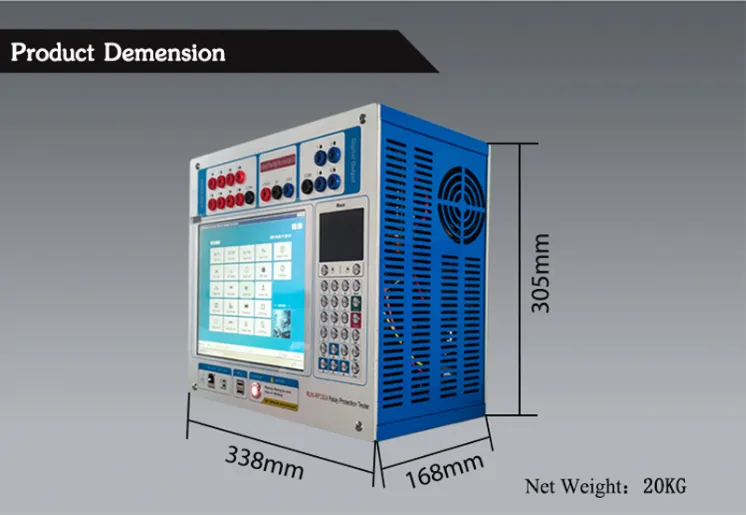
| Dimension | 338 x 168 x 305 mm |
| Alimentation électrique | AC220V±10%,50Hz,10A |
Caractéristiques du testeur de relais de protection par micro-ordinateur
1.4 phase voltage and 3 phase current output. It can test not only various traditional relays and protection devices, but also various modern microcomputer protections, especially for transformer differential protection and standby automatic switching device. The test is more convenient and perfect.
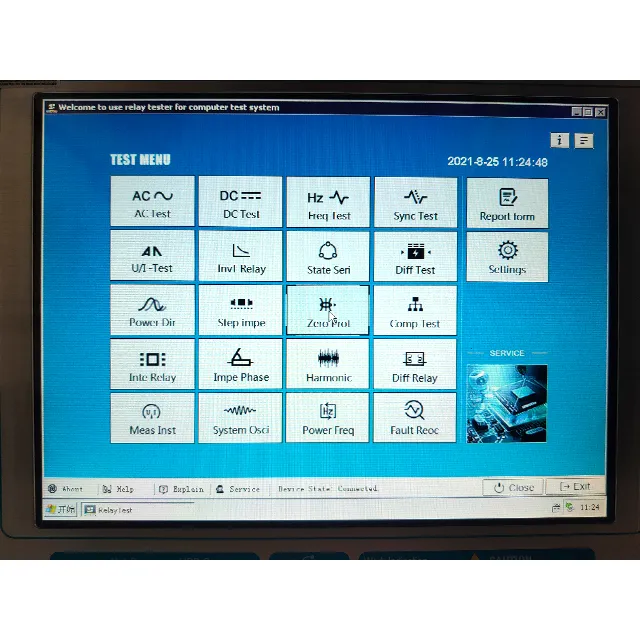
2.Classic Windows system operation interface, friendly man-machine interface, easy and fast operation; high performance embedded industrial control computer and 8.4-inch resolution 800 × 600 TFT true color display screen, can provide rich and intuitive information, including the current working state of the equipment and various help information.
3.Self-recovery function to avoid system crash caused by illegal shutdown or mis-operation.
4.Equipped with ultra-thin industrial keyboard and photoelectric mouse, it can complete all kinds of operations through keyboard or mouse just like PC.
5.The main control board adopts DSP + FPGA structure and 16 bit DAC output. It can generate 2000 high density sine wave per cycle for fundamental wave, which greatly improves the quality of waveform and the accuracy of the tester.
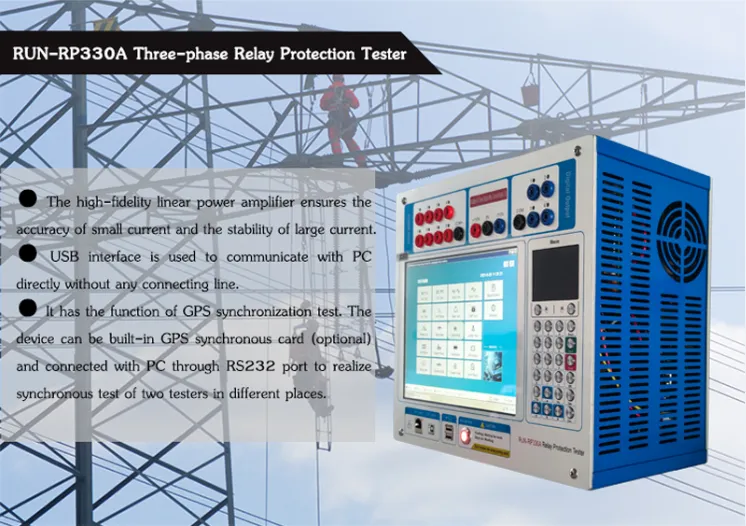
6.The high-fidelity linear power amplifier ensures the accuracy of small current and the stability of large current.
7.USB interface is used to communicate with PC directly without any connecting line.
8.It has the function of GPS synchronization test. The device can be built-in GPS synchronous card (optional) and connected with PC through RS232 port to realize synchronous test of two testers in different places.
9.Equipped with independent dedicated DC auxiliary voltage source output, the output voltage is 110V (1A), 220V (0.6A). It can be used for relays or protection devices that need DC power supply.
10.It has the function of software self-calibration, which avoids opening the case to calibrate the accuracy by adjusting the potentiometer, thus greatly improving the stability of accuracy.