
Expert Guide: 7 Key Factors for Selecting Three Phase Relay Test Kits in 2026
ديسمبر 31, 2025
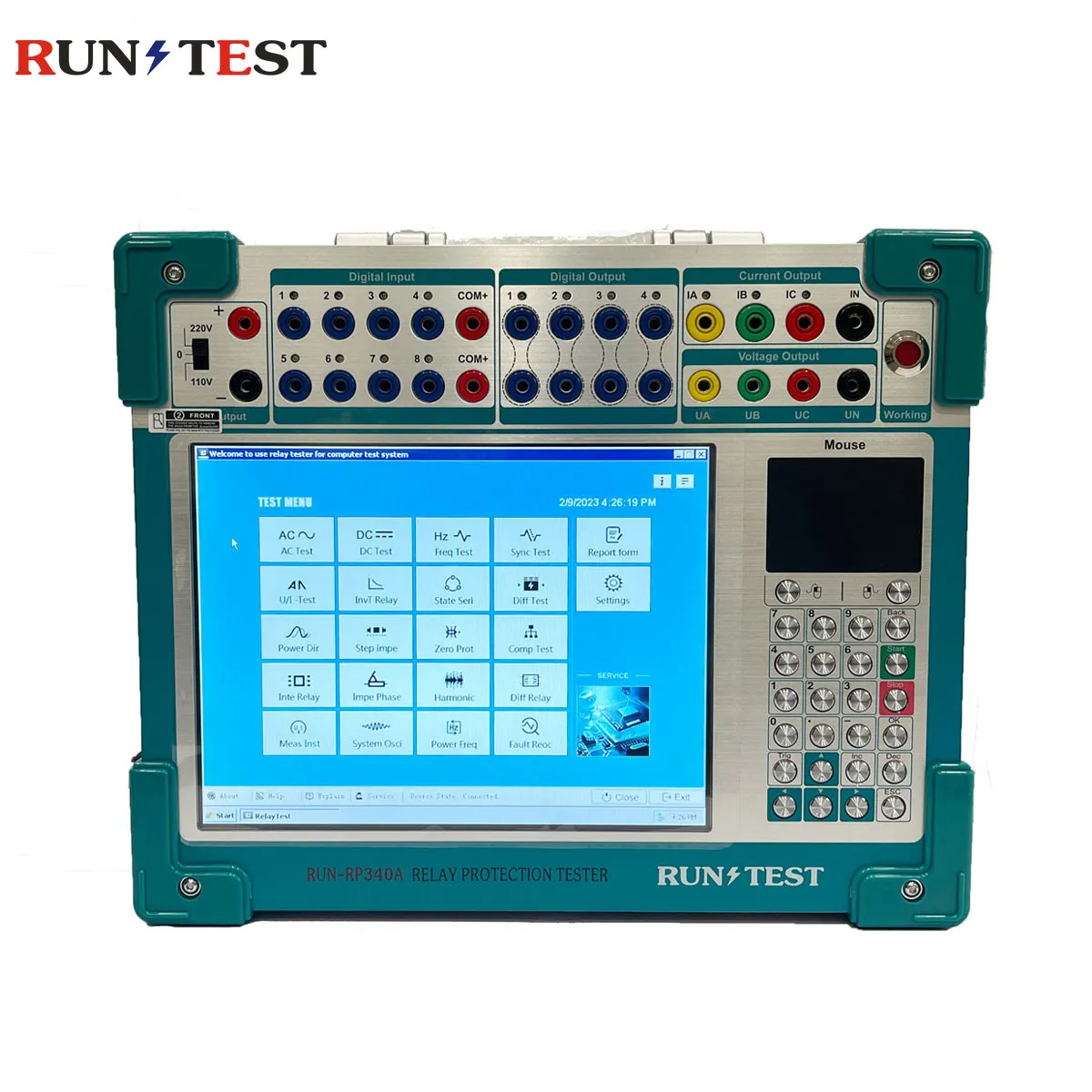
Abstract
The operational integrity of modern electrical power systems is fundamentally reliant on the precise and dependable performance of protective relays. These devices function as the sentinels of the grid, tasked with detecting fault conditions and initiating the isolation of compromised sections to prevent cascading failures and widespread blackouts. This article examines the essential characteristics and selection criteria for three-phase relay test kits, which are indispensable tools for commissioning, maintaining, and troubleshooting these protective systems. It presents a comprehensive analysis of key technical specifications, including output channel capabilities, power ratings, and measurement accuracy. The discussion extends to the software functionalities that enable automated testing sequences, the physical attributes that determine field portability and durability, and the necessity of compliance with evolving international standards such as IEC 61850. By adopting an analytical and pedagogical approach, this guide provides power system engineers and technicians with a structured framework for evaluating and selecting the most appropriate three-phase relay test kit for their specific applications in diverse global markets.
Key Takeaways
- Evaluate a kit’s output channels for sufficient voltage, current, and power to test all your relays.
- Prioritize devices with automated testing software to improve efficiency and reduce human error.
- Ensure the equipment is portable and durable enough for your specific field environment.
- Verify compliance with modern standards like IEC 61850 for future-proofing your investment.
- Consider the manufacturer's support and warranty when choosing a three phase relay test kit.
- Select a test set with high accuracy to guarantee reliable and precise protection scheme verification.
Table of Contents
- Understanding the Heart of Power System Protection
- Factor 1: Output Capability and Precision
- Factor 2: Functional Versatility Across Relay Generations
- Factor 3: The Intelligence Within—Software and Automation
- Factor 4: Built for the Field—Portability and Durability
- Factor 5: Navigating the Digital Substation with IEC 61850 Compliance
- Factor 6: Uncompromised Safety and Certification
- Factor 7: Beyond the Purchase—Support, Training, and Lifecycle Value
- FAQ
- Conclusion
- References
Understanding the Heart of Power System Protection
Imagine a vast and intricate network, the circulatory system of our modern industrial and domestic life. This network is the electrical power grid. Like any complex system, it is vulnerable to disturbances—short circuits from falling tree limbs, insulation failures in aging equipment, or lightning strikes. Without a rapid and intelligent defense mechanism, a single localized fault could cascade into a regional blackout, causing immense economic and social disruption. This defense mechanism is the protection system, and its vigilant soldiers are the protective relays.
A protective relay is a device that constantly monitors electrical quantities like current, voltage, and frequency. When it detects an abnormal condition that signifies a fault, it makes a critical decision in milliseconds: it sends a trip signal to a circuit breaker, which then physically disconnects the faulted part of the network. Think of it as the nervous system of the power grid; the relay is the nerve ending that senses pain (the fault), and the circuit breaker is the muscle that pulls the hand away from the fire.
For this system to be trustworthy, we must be absolutely certain that the relays will operate exactly as intended. A relay that fails to trip during a fault (a failure of dependability) can lead to catastrophic equipment damage. Conversely, a relay that trips when there is no fault (a failure of security) causes unnecessary outages. How can we build this confidence? We cannot simply install a relay and hope it works. We must test it. This is where a three phase relay test kit becomes an indispensable instrument for the power systems engineer. It is a specialized piece of equipment designed to simulate the power system, allowing us to subject a relay to a full spectrum of normal and fault conditions in a controlled environment. By injecting precise three-phase voltages and currents, we can verify that the relay's "brain" makes the right decision at the right time, every time.
The Shift from Single-Phase to Three-Phase Testing
In the early days of relaying, testing was often performed one phase at a time. This was adequate for simpler electromechanical relays. However, our power systems are almost universally three-phase alternating current (AC) systems. Faults are rarely simple, single-phase events. They can involve two or three phases, with complex and dynamic shifts in voltage and current magnitudes and phase angles.
Testing a modern microprocessor-based relay, which analyzes the relationships between all three phases simultaneously, with a single-phase injection is like trying to diagnose a patient's heart condition by only listening to one of the four chambers. You get an incomplete picture. A three-phase relay test kit allows us to replicate the true three-phase environment that the relay experiences on the grid. It can simulate a balanced three-phase load, a phase-to-ground fault, a phase-to-phase fault, or a three-phase fault with stunning accuracy, providing a complete and holistic examination of the relay's performance. This capability is not just a convenience; it is a necessity for ensuring the reliability of modern protection schemes.
Factor 1: Output Capability and Precision
When you begin the process of selecting a three-phase relay test kit, the first and most fundamental consideration must be its output capabilities. The test kit is, at its core, a controllable power source. Its primary function is to inject voltages and currents into the relay to simulate system conditions. If it cannot generate the necessary signals with sufficient power and accuracy, all other features become irrelevant.
Current and Voltage Channels: The Power to Simulate
A standard three-phase relay test kit will typically offer at least three voltage output channels and three current output channels. This configuration allows for the simulation of a complete three-phase system. However, the specifications of these channels are what truly define the instrument's utility.
- Current Output (Amps): Consider the range of relays you need to test. Older electromechanical overcurrent relays can have high burdens, meaning they require a significant amount of power to operate their internal mechanisms. A test kit might need to supply 30, 60, or even more than 100 Amps per phase to test these devices properly. Modern microprocessor relays have a much lower burden, but high current capacity is still needed for testing instantaneous protection elements.
- Voltage Output (Volts): Voltage channels are used to simulate the system voltage seen by the relay. A typical range might be 0-150V per phase, which is sufficient for most protection schemes that use standard voltage transformers (VTs). The ability to simulate undervoltage, overvoltage, and the voltage depression that occurs during a fault is essential.
- Power Output (VA): This is perhaps the most misunderstood yet vital specification. Power, measured in Volt-Amperes (VA), is the product of voltage and current. It represents the test set's ability to drive a current through the impedance of the relay and the test leads. A test set might be rated for 100 Amps, but if its power rating is too low, the voltage will collapse when trying to inject that current into a high-burden relay, leading to inaccurate and failed tests. Always check the VA rating at the maximum current output.
Accuracy and Resolution: The Foundation of Trust
The entire purpose of testing a relay is to verify its settings with a high degree of confidence. This confidence is directly tied to the accuracy of the test kit. If a relay is set to trip at 10 Amps, and your test kit has an error of 5%, the actual trip point could be anywhere between 9.5 and 10.5 Amps. This uncertainty can be the difference between a stable system and a mis-operation.
Look for accuracy specifications that are expressed as a percentage of the reading plus a percentage of the full-scale range. An accuracy of 0.1% or 0.2% is common for high-quality, modern test sets (). Resolution is also important; it defines the smallest increment by which you can adjust the output. A fine resolution allows you to pinpoint the exact pickup and dropout points of a relay's operation.
| Feature | Electromechanical Relay Testing Needs | Microprocessor Relay Testing Needs |
|---|---|---|
| Current Output | High (e.g., 30-100+ A) | Moderate (e.g., 15-30 A) |
| Power (VA) Rating | High (e.g., >300 VA per phase) | Low to Moderate (e.g., >50 VA per phase) |
| Waveform Purity | Less critical | High (low distortion required) |
| Phase Angle Accuracy | Moderate | High (essential for directional/distance relays) |
| Frequency Control | Basic (50/60 Hz) | High (for testing frequency elements) |
Factor 2: Functional Versatility Across Relay Generations
A substation is often a living museum of technology. On one panel, you might find a robust electromechanical induction disc relay manufactured in the 1970s, while the adjacent panel houses a state-of-the-art numerical relay with advanced communication capabilities. The ideal three-phase relay test kit must be a master of time travel, capable of communicating with and comprehensively testing devices from every era.
Testing Electromechanical Relays
These classic relays operate on physical principles. An overcurrent relay might use the magnetic field from a current coil to induce torque on a metal disc, which rotates against the pull of a spring. Testing them requires a focus on raw power and simple measurements.
- Pickup and Dropout: The test involves slowly ramping up the current until the relay's contacts close (pickup) and then slowly decreasing it until they open again (dropout). This requires a test set with smooth, manual control and a high enough VA rating to overcome the relay's internal impedance, or "burden."
- Timing Tests: For a given fault current, how long does it take for the relay to operate? This is governed by its time-current curve (TCC). The test kit must apply a step change in current (e.g., from zero to 20 Amps) and precisely measure the time until the trip contact closes, often with millisecond accuracy.
Testing Modern Microprocessor (Numerical) Relays
Numerical relays are special-purpose computers. They convert analog voltage and current signals into digital data and then process this data using sophisticated algorithms. Testing them is less about brute force and more about finesse and intelligence.
- Complex Waveforms: Modern relays can detect not just the magnitude of a fault but also its "flavor." They analyze harmonic content, DC offset, and complex impedance characteristics. A good test kit must be able to generate these complex, transient waveforms, not just pure sine waves.
- State Sequence Testing: Instead of just one pre-fault and one fault state, a test can be programmed as a sequence: a healthy pre-fault condition, followed by a fault, then a "post-fault" condition simulating the circuit breaker opening. This tests the relay's logic more thoroughly.
- Specialized Functions: Numerical relays are packed with features. A single box might contain overcurrent, distance, differential, and frequency protection. The test kit's software should have dedicated modules for testing each of these functions according to established procedures. For instance, testing a distance relay involves simulating faults at various points along a transmission line to verify that its impedance-based "zones" of protection are correctly configured.
| Relay Type | Primary Test Method | Key Parameters to Verify with a Test Kit |
|---|---|---|
| Overcurrent (50/51) | Injecting variable current | Pickup level, time-current curve (TCC) shape |
| Distance (21) | Injecting voltage and current at specific phase angles | Zone reach, operating characteristic shape (Mho, Quad) |
| Differential (87) | Injecting currents into multiple inputs simultaneously | Pickup current, slope characteristic, harmonic restraint |
| Directional (67) | Injecting voltage and current with varying phase shift | Maximum torque angle, boundary conditions |
| Frequency (81) | Injecting signals with varying frequency | Pickup frequency, rate-of-change-of-frequency (ROCOF) |
This versatility is a key economic consideration. Investing in a single test kit that can handle the full spectrum of relays in your system avoids the need for multiple, specialized pieces of equipment, streamlining training, maintenance, and fieldwork.
Factor 3: The Intelligence Within—Software and Automation
If the output channels are the muscle of a three-phase relay test kit, then its software is the brain. In the era of manual testing, a technician would spend hours meticulously adjusting knobs, recording values by hand, and manually calculating results. Today, modern software has transformed relay testing from a laborious art into a precise and efficient science. The quality of a test kit's software is as important as its hardware specifications.
The User Interface: From Complexity to Clarity
A powerful tool is useless if it is too complicated to operate. The user interface (UI) is your window into the test set's capabilities. A well-designed UI, often running on a built-in computer or a connected laptop, should be intuitive and logical.
- Graphical Representation: Instead of just numbers, the software should provide graphical representations of the test. For a distance relay, this means plotting the test points directly on the relay's impedance characteristic (the R-X diagram). For a timing test, it means showing the injected current and the contact status on a timeline. This visual feedback makes it immediately obvious whether a test has passed or failed.
- Drag-and-Drop Functionality: Creating complex test sequences should be straightforward. Modern software often allows you to build a test plan by dragging and dropping modules—a state of normal operation, a fault state, a ramp, etc.—and then configuring the parameters for each.
Automation and Pre-Built Templates
The single greatest advantage of modern software is automation. It allows for the creation of comprehensive test plans that can be executed with a single click.
- Relay Test Libraries: Many manufacturers, such as Megger and others, provide extensive libraries of test templates for specific relay models from various vendors (e.g., SEL, GE, Siemens) (). These templates are pre-configured with the relay's characteristics and the standard tests required for commissioning. This saves an immense amount of setup time and reduces the risk of human error in transcribing settings. A technician can simply select the relay model, enter the specific settings from the coordination study, and the software builds the entire test plan automatically.
- State Sequence and Transient Testing: The software allows you to define a series of "states" to simulate a dynamic event on the power system. For example: State 1 (Prefault): Normal load for 1 second. State 2 (Fault): A phase-to-ground fault with a decaying DC offset for 200 milliseconds. State 3 (Post-fault): Zero current and reduced voltage for 2 seconds. This automated sequence tests the relay's behavior through the entire event, which is impossible to do accurately with manual controls.
Reporting: From Raw Data to Actionable Insight
Testing is not complete until the results are documented. Manual data recording is prone to errors and creates a documentation bottleneck. A key function of the test software is to automatically generate detailed and professional test reports.
A good report should include:
- Information about the asset being tested (substation, feeder, relay model, serial number).
- The specific settings that were programmed into the relay.
- A clear pass/fail summary for each test performed.
- Detailed results, both in tabular and graphical form.
- A section for technician comments and signatures.
These reports form a permanent record of the relay's condition, which is invaluable for maintenance planning, fault analysis, and regulatory compliance. The ability to generate consistent, professional reports directly from the field elevates the quality and efficiency of any testing program. When selecting a kit, always ask for a demonstration of the software and evaluate its ease of use, the depth of its test library, and the quality of its reporting features.
Factor 4: Built for the Field—Portability and Durability
A three-phase relay test kit is not a delicate laboratory instrument that spends its life on a clean bench. It is a tool of the trade, destined for a rugged existence. It will be transported in the back of a pickup truck, wheeled across gravel switchyards, and operated in the challenging environments of substations, from the freezing winters of Russia to the scorching heat of the Middle East. Therefore, its physical design—its portability and durability—is a critical factor in its long-term value and usability.
Portability: The Challenge of Weight and Size
Power electronics capable of generating thousands of watts are inherently heavy. Early generations of three-phase test sets were monstrous, often requiring two people to lift. While a certain amount of mass is unavoidable, advances in switching amplifier technology and power supply design have led to a new generation of more compact and lightweight kits.
When evaluating portability, consider:
- Weight: Can a single person safely lift and carry the unit? A weight under 20-25 kg is generally considered manageable for one person. Some smaller, more specialized units can be even lighter.
- Form Factor: Does it have well-placed, sturdy handles? Does it come with integrated wheels and a telescoping handle for easy transport over longer distances? A slim profile is also advantageous for fitting through narrow substation control room doors.
- All-in-One vs. Modular: Some systems are fully integrated into a single case, while others are modular, with separate amplifier and control units. Modular systems can be lighter to carry piece by piece but require more setup time. An all-in-one design is generally preferred for its speed and simplicity in the field.
Durability: Surviving the Real World
The enclosure of the test kit is its first line of defense. Look for robust construction, often a hard-molded plastic or polymer case that is resistant to impact, water, and dust. Many high-quality kits are built into a "Pelican-style" case with reinforced corners and secure latches.
Environmental specifications are also paramount:
- Operating Temperature Range: A test set intended for global use must be able to function reliably in a wide range of temperatures. A specification of -10°C to +50°C is a good benchmark. For markets in extremely hot or cold climates, an even wider range may be necessary.
- Ingress Protection (IP) Rating: While not always provided, an IP rating indicates the level of protection against dust and water. Even a basic level of protection can prevent damage from a sudden rain shower or blowing dust in the switchyard.
- Shock and Vibration Resistance: The internal components should be securely mounted to withstand the bumps and vibrations of transport. Some manufacturers provide information on the shock and vibration standards their equipment is designed to meet, which can be a good indicator of ruggedness.
As noted by some electrical test equipment suppliers, the packaging for shipment is also an indicator of the manufacturer's attention to durability. A sturdy wooden case with internal foam padding ensures the device arrives at its destination without damage (voltage-tester.com). This attention to detail often reflects the overall build quality of the instrument itself.
Factor 5: Navigating the Digital Substation with IEC 61850 Compliance
The world of substation protection and control is undergoing its most significant transformation in a century. We are moving away from a world of copper wires, where every signal—every analog value and every trip contact—had its own dedicated physical cable. We are entering the era of the "digital substation," a world built on fiber optic networks and a universal language: IEC 61850. For anyone purchasing a three phase relay test kit in 2026, ensuring it is fluent in this language is not just a feature; it is an absolute necessity for future-proofing your investment.
What is IEC 61850?
At its heart, IEC 61850 is a standard for communication in electrical substations. It defines not only the protocol but also the data models and the engineering process. Instead of physical wires, information is exchanged as digital messages over an Ethernet network. Two key message types are fundamental to protection testing:
- GOOSE (Generic Object Oriented Substation Event): This is the replacement for hard-wired trip signals. When a relay decides to trip a circuit breaker, it doesn't close a physical contact. Instead, it publishes a GOOSE message onto the network. The circuit breaker's controller, which is "subscribed" to that message, receives it and operates the breaker. GOOSE messages are incredibly fast and reliable, designed for time-critical protection functions.
- Sampled Values (SV or SMV): This is the replacement for the copper wiring from current transformers (CTs) and voltage transformers (VTs). Instead of analog signals, special devices called "merging units" (MUs) located in the switchyard digitize the currents and voltages and publish them as a continuous stream of Sampled Value messages onto the network. The protective relays then subscribe to these SV streams to get their measurement data.
Why Your Test Kit Must Be IEC 61850-Native
Testing in a digital substation is fundamentally different. You can no longer simply inject an analog current into the relay's terminals and check for a contact closure.
- Simulating the Network: A modern test kit must have an Ethernet port and the ability to act as a device on the substation network. To test a relay, the test kit might need to publish a stream of Sampled Values to simulate a fault current.
- Subscribing to GOOSE: To verify that the relay operated, the test kit must subscribe to the relay's GOOSE trip message and time-stamp its reception with millisecond accuracy.
- Testing Merging Units: The test kit may also need to test the merging units themselves by injecting a primary or secondary analog current into the MU and then subscribing to its SV output stream to verify its accuracy and timing.
A test kit with native IEC 61850 capability provides a dedicated interface for configuring these complex communication-based tests. It will allow you to import the substation's configuration files (SCD files), browse the network for signals, and set up publisher/subscriber relationships intuitively. Trying to test an IEC 61850 scheme without a purpose-built test set is an exercise in frustration and is prone to error. It would be like trying to browse the modern internet with a 1990s dial-up modem; the tool is simply not designed for the environment. As grids in South America, Southeast Asia, and the Middle East continue to modernize, IEC 61850 will become the standard, making this capability an essential selection criterion.
Factor 6: Uncompromised Safety and Certification
In the high-voltage environment of an electrical substation, safety is not a feature; it is the overriding principle that governs all work. The tools and equipment used in this environment, including relay test kits, must be designed from the ground up with operator safety as the highest priority. A momentary lapse in equipment design can have devastating consequences. Therefore, a thorough evaluation of a test kit's safety features and certifications is a non-negotiable step in the selection process.
Built-in Hardware and Software Safety Features
A well-designed test set incorporates multiple layers of protection to safeguard both the operator and the equipment under test.
- Emergency Stop: A prominent, easily accessible emergency stop button is the most basic and critical safety feature. Pressing this button should immediately and completely de-energize all output channels without requiring software interaction.
- Thermal and Overload Protection: The internal amplifiers that generate the high currents can produce significant heat. The test set must have continuous monitoring of its internal temperature and automatically shut down or limit its output if it exceeds a safe operating temperature. Similarly, it should have electronic protection against overloads and short circuits on its outputs.
- Safe Connection Procedures: The software should guide the user through a safe connection process. For example, it should verify that the connections are correct before allowing the outputs to be energized. Some advanced systems can even detect open circuits in the current injection path, which can produce dangerously high voltages if energized.
- Grounding: A secure and low-impedance connection to the station ground is essential for safety. The test set should have a dedicated, clearly marked grounding terminal, and its manual should specify the correct grounding procedure.
The Importance of International Certifications
How can you be confident that a manufacturer's safety claims are valid? The answer lies in independent, third-party certification to internationally recognized standards.
- CE Marking: The CE mark is a declaration by the manufacturer that the product meets the essential health, safety, and environmental protection requirements of the relevant European Union directives. For a relay test kit, this typically involves compliance with the Low Voltage Directive (LVD) and the Electromagnetic Compatibility (EMC) Directive. The LVD ensures electrical safety, while the EMC directive ensures that the test set does not emit excessive electromagnetic interference and is not unduly affected by interference from other devices ().
- ISO 9001 Certification: While not a product certification, ISO 9001 certification for the manufacturer indicates that they have a robust quality management system in place. This provides confidence that products are designed, manufactured, and tested in a consistent and controlled manner, which contributes to overall safety and reliability ().
- CAT Rating (Measurement Category): As explained by experts at Megger, even though a relay tester is used on de-energized circuits, it could accidentally be connected to a live system. A CAT rating (e.g., CAT IV 600V) indicates the instrument's ability to withstand high voltage transients without creating a hazard to the operator. This is a vital safety consideration in the high-energy environment of a substation (megger.com).
Never purchase a piece of high-power test equipment that lacks appropriate safety certifications. The cost savings are insignificant compared to the potential risk to personnel and equipment.
Factor 7: Beyond the Purchase—Support, Training, and Lifecycle Value
The decision to acquire a new three-phase relay test kit is a significant capital investment. The relationship with the manufacturer should not end once the payment is made. The true value of the investment is realized over the entire lifecycle of the equipment, and this value is heavily influenced by the quality of the post-sales support, the availability of training, and the overall reliability of the device.
Technical Support and Warranty
When you are in a substation, facing a complex relaying problem with a deadline looming, having access to expert technical support is invaluable. Before purchasing, investigate the manufacturer's support infrastructure.
- Availability: Do they offer 24-hour support? Is support available in your local time zone and language? Some suppliers emphasize their 24-hour online service as a key benefit (voltage-tester.com).
- Expertise: Is the support team staffed by experienced application engineers who understand relay protection, not just the test equipment? Can they help you troubleshoot a difficult test setup or interpret unusual results?
- Warranty and Repair: What is the standard warranty period? Typically, one year is a minimum, but some manufacturers may offer longer periods. Where are the service centers located? If the unit needs repair, how long will it take? A long downtime can significantly impact your work schedule. Having a local or regional service center is a major advantage.
Training: Unlocking the Full Potential
A modern relay test kit, especially one with advanced software and IEC 61850 capabilities, is a sophisticated instrument. Without proper training, your team may only use a fraction of its capabilities. A good manufacturer sees training as part of the product offering.
- Initial Training: Does the purchase include on-site training for your team? This is the most effective way to get new users up to speed quickly.
- Ongoing Education: Do they offer regular webinars, online tutorials, or regional training seminars? The field of relay protection is constantly evolving, and ongoing education is essential for keeping skills current.
- Quality of Materials: Are the user manuals and documentation clear, comprehensive, and well-written? Are there application notes or guides available that provide practical examples of how to test different types of relays?
Calculating the Total Cost of Ownership (TCO)
The initial purchase price is only one component of the total cost of ownership. A cheaper unit that is unreliable, difficult to use, or has poor support can end up costing far more in the long run through lost productivity, project delays, and the potential costs of a missed fault.
When evaluating the lifecycle value, consider:
- Reliability: A test set that is frequently out of service for repairs is a liability. Look for manufacturers with a reputation for building robust and reliable equipment.
- Calibration: How often does the unit require calibration, and what is the cost and turnaround time for this service?
- Software Updates: Are software updates included, or is there an annual subscription fee?
- Efficiency Gains: A test set with powerful automation and an intuitive interface can significantly reduce the time required to test a relay. This labor saving, multiplied over hundreds of relays and the lifetime of the test set, can be a massive financial benefit.
Choosing a partner, not just a supplier, is the final and perhaps most important step. A manufacturer who is invested in your success through excellent support and training will deliver the greatest return on your investment. A versatile relay protection tester backed by a strong company ensures you are equipped for the challenges of today and the transformations of tomorrow.
FAQ
What is the main difference between a three-phase and a six-phase relay test kit?
A three-phase relay test kit typically provides three voltage channels and three current channels. This is sufficient for testing the vast majority of protection relays. A six-phase test kit offers more channels, often six voltage and six current outputs. This enhanced capability is specifically designed for more complex testing scenarios, such as the commissioning of transformer differential protection schemes on three-winding transformers, or testing protection systems that require the simulation of two independent three-phase systems simultaneously, which can occur in some generator or busbar protection schemes.
How often should I test my protective relays?
The required testing interval depends on several factors, including the criticality of the circuit, the type of relay, and the environmental conditions. A common industry practice is to perform comprehensive commissioning tests when a relay is first installed. After that, routine maintenance testing is typically performed every 3 to 6 years for critical transmission line relays. For less critical distribution circuits, the interval might be longer. Older electromechanical relays often require more frequent testing than modern, self-monitoring numerical relays. Always consult your company's internal maintenance standards and relevant regulatory requirements.
Can I test a modern numerical relay with an old, manual test set?
While it might be technically possible to perform very basic tests (like a simple overcurrent pickup test), it is highly inadvisable and insufficient. Modern numerical relays have complex algorithms, transient behavior analysis, and communication functions that cannot be verified with a manual test set. You would be unable to test its timing characteristics accurately, evaluate its directional or impedance logic, or verify its IEC 61850 communication. Using a modern, automated three-phase relay test kit is essential to ensure these relays are functioning correctly.
What does the "burden" of a relay mean, and why is it important for testing?
The burden of a relay refers to the amount of power (measured in VA) that it draws from the current and voltage transformers to operate. Electromechanical relays have a high burden because they use the input power to physically move components like discs and plungers. Microprocessor relays have a very low burden as they only need to power their electronic circuitry. This is important for testing because the test kit must have a high enough VA power rating to supply the relay's burden without its output voltage collapsing. A test kit with an insufficient VA rating will be unable to accurately test high-burden electromechanical relays.
Is it necessary for my test kit to be compliant with the IEC 61850 standard?
In 2026, the answer is an emphatic yes. While many existing substations still use conventional copper wiring, all new substation construction and major refurbishment projects are increasingly based on the IEC 61850 standard. A test kit without IEC 61850 capabilities (the ability to send and receive GOOSE and Sampled Value messages) will be obsolete for work in these modern digital substations. Investing in a compliant test kit is a crucial step to future-proofing your testing capabilities.
What is secondary injection testing?
Secondary injection testing is the standard method for testing protective relays. It involves disconnecting the relay from its permanent Current Transformers (CTs) and Voltage Transformers (VTs) and connecting the relay test kit directly to the relay's input terminals. The test kit then "injects" simulated secondary-level voltages and currents to test the relay's logic and operation. This is distinct from primary injection testing, where high current is injected through the primary conductor to test the entire system, including the CTs and all associated wiring.
Conclusion
The selection of a three-phase relay test kit is a decision that resonates through the core of a power system's reliability. It is far more than the simple purchase of a tool; it is an investment in the stability of the grid and the safety of the personnel who maintain it. As we have explored, the process demands a careful and holistic evaluation, moving beyond the surface-level specifications of a datasheet. It requires a deep understanding of the diverse ecosystem of relays to be tested, from the sturdy electromechanical veterans to the sophisticated numerical devices that define the modern grid.
An effective choice hinges on a balanced consideration of output power and precision, functional versatility, and the transformative efficiency offered by intelligent software automation. The physical resilience of the equipment ensures it can withstand the rigors of fieldwork in diverse and demanding climates, while compliance with emerging standards like IEC 61850 ensures its relevance and utility for years to come. Ultimately, the commitment of the manufacturer to safety, support, and training forms the bedrock of a successful long-term partnership. By systematically applying this multi-faceted framework, engineers and asset managers can equip their teams with an instrument that not only verifies the integrity of their protection systems but also enhances the overall quality, safety, and efficiency of their maintenance programs.